Part 1 had the dramas
Part 2 had the animation, franchises & action
There were some great
female-centred treats.
Kane Senes and Hannah Barlow’s ‘Sissy’
is for the bullied girls with a secret psycho side, although the gag being that
the kills are more from her clutziness and cognitive dissonance. With an almost
sit-com brightness and lightness, ‘Sissy’ allows the runt a little
revenge fantasy. The twist is all her malevolence and psychopathy are hidden
behind the surface veneer smile and empowerment of the “influencer” trend. ‘Eighth
Grade’ goes slasher, sort of. It fails to address the race issue that is
visible (they’re white; Sissy is black) but its play with dark humour and
nastiness make this an enjoyable horror farce. It’s a dark humoured bubblegum
horror with a fine central performance for a character who found solace and
identity in being an online persona.

Social Media drama and horror has
shown a distinct interest in exploring female identity and individuality. ‘Eighth
Grade’ or even ‘We’re All Going to the World’s Fair’ posit that the
kids are wise to the social media world. ‘Influencer’ plays
with how vulnerable it makes us when all our information is out there for any
scam artist to manipulate. It’s one woman visiting vengeance on all that is
fake and enviable on the flashes of someone’s else’s idealised life glimpsed
from social media.
 Mimi Cave’s ‘Fresh’
is probably what you thought ‘A Wounded Fawn’ was going to be, and it
even goes psychedelic for a moment with the (late) credits going all Joe Meek.
It ended up being more fun than odd by comparison, sported fine performances
and impressive set design. Ladies! Beware When Dating! is the
premise, but the modern move has been to give our protagonists credibility and
resilience and simply more shading to the Final Girls (for the most part) so
these tales are more convincing.
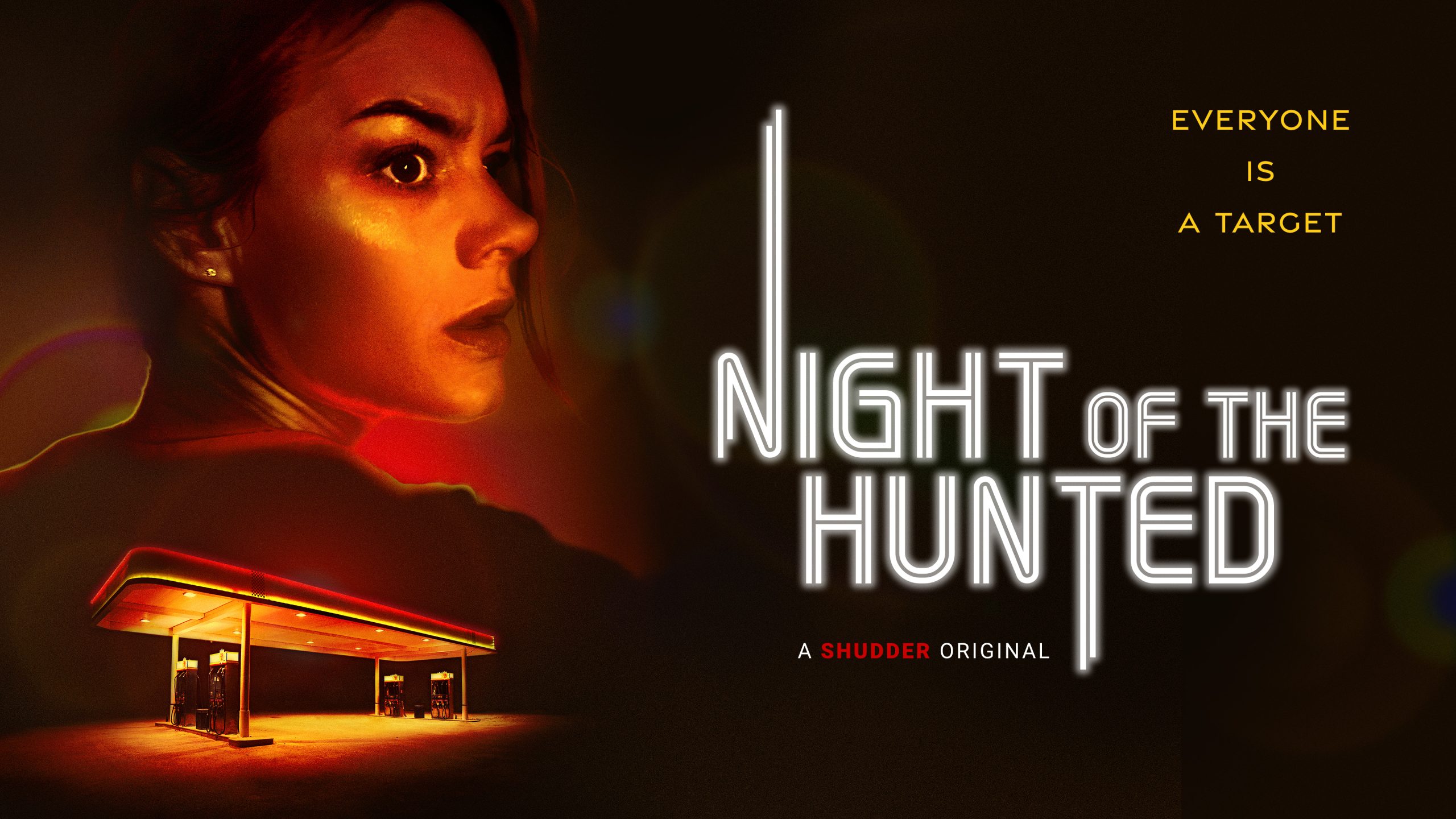
But Franck Khalfoun’s ‘Night
of the Hunted’ proves problematic: as soon our adulteress
protagonist says that her only problem is men telling her what her problem is,
we know that she’s going to be all Final Girl. However, what the film then
proceeds to do is to pin her down under threat of death so that one guy can
mansplain endlessly over a walky-talky at her. There’s just the sense that the
film thinks that she is somehow, in some way, deserving. And that’s easily
dismissible. There’s just something not to trust.

And I feel something a little
unpersuaded towards the otherwise fun and very popular ‘Talk to Me’.
Danny and Michael Philippou certainly hit on a franchise here, with a fairly
fresh premise – kids get together to party on being possessed instead of drink’n’drugs
– but a certain waving away of detail and plausible repercussion, and a lack of
self-awareness from the film itself about its protagonists self-awareless means
that, for this viewer, it was less convincing and more superficial than
expected. Instant
classic horror film but more superficial than it thinks, as it doesn’t really
engage with the repercussions of its premise (the grief involved; the
self-destructive nature of teenage nihilism).
·
Back
to the ladies:
As much as I enjoyed the alien
attack of Brian Duffield ‘No One Will Save You’, I
remained similarly unpersuaded by the deliberately tricky-ambiguous ending (I
am sure I’ll write more on that), firmly putting this in the same box as Half
Satisfying Alien Abduction films. One woman’s persecution complex and trauma
through sci-fi allegory? But the wordlessness, the stylisation and the primal
fear of thingies out to get you were thoroughly enjoyable.
There is also an issue with the
otherwise fine ‘It Lives Inside’ by Bushal Dutta. Yes,
it’s tropey, but with a little Hindi twist and a decent lead character
conflicted between her heritage and forging her own identity, there’s enough to
keep this fresh. But mostly, an endearing practical monster makes up for a lot.
The issue: more alarming is the apparent conclusion that, although the
malevolence is imported from the old world, if you don’t absorb and follow it,
swallow it down and keep feeding it, it will destroy all your loved ones.
Ali Abassi’s ‘The Holy Spider’ disturbed not only for it’s Based On A True inspiration,
but for the way it took that only as the starting point for how cultural
misogyny inspires fanatical murder and cultivates an approving society. There
may be rough edges, but Abbasi’s film was full of righteous rage and horror.
Certainly, that last scene disturbed me no end, in what it meant for that
character and said about society at large.

Saïd Belktibia’s ‘Hood
Witch’ also confronted outdated conceptions of women and how that
plays still in the modern era. From the crash-course in witch hunts and modern
belief in witchcraft that opens, it is obvious that this is a film that’s fully
awake and that there will be no slow burn here. Indeed, the whole opening with
our protagonist going through customs with her son is a gripper, showing that
we are in for serious business (although the issue of prison is sidestepped).
Indeed, Golshifteh Farahani is nothing less than compelling and fiery as a
woman exploiting people’s belief in witchcraft on her estate as she dips in an
out of her ongoing feud with her estranged husband. It soon becomes apparent
that her son is everything that’s at stake, physically, emotionally and
spiritually as the story launches into the witch hunting and becomes a chase
narrative. Running at a unshakable pace, there’s nothing supernatural here,
just a kitchen sink thriller with streaks of commentary about the role of
women, the consequences of charlatanism and the bloodthirstiness of faith,
whether a witch-hunt or a self-flagellation.

John Rosman’s ‘New Life’ was
not quite what you might think initially, this impressive debut has two
excellent lead performances that effortlessly guide through the myriad genres
to discuss the issue of failing bodies. Rarely do we see the subject touched
with such focus in this way in genre. There's character drama, chase thriller,
horror, sci-fi - a heady mix. It's the stuff that inspires body-horror (indeed,
the film says this very thing), but the empathy and humanity that guides this
right to the end is quite unique.

All these had great female
performances, but Lily Sullivan more than held her own as the only face on
screen in Matt Vesely’s ‘Monolith’. Although conveyed only
through telephone calls to a journalist seemingly willing to compromise herself
when desperate, the mystery is riveting. Her investigation of sinister “bricks”
is bizarre enough material to be gripping. Is she falling for a conspiracy or
mass-delusion? Like 'Void of Night' or 'Pontypool' for example, a film that
demonstrates that spoken-word genre storytelling can still work as a dominating
factor is cinema. Down-the-rabbit-hole horror with an excellent Lily Tyler
where all the clues do add up, there’s a little class commentary, lots of
creepiness and a conclusion that, even if it goes in the direction you
anticipated, still offers a few surprises to satisfy.

Samuel Bodin’s ‘Cobweb’
was above average studio fare, containing enough feints and genre-play to make
horror fans laugh with recognition (oh, home invasion masks now?). The
FrightFest audience also chuckled away at the scenery-chewing of Caplin and
Starr as the parents who evidently neighbour ‘The People Under the Stairs’.
Suburban Gothic, cartoonish crazy parents. something in the walls, threatened
kids, some flecks of nastiness. Thoroughly entertaining. Cannier than you might
expect with a genuine underlay of fairy-tale nastiness.

Barnaby Clay’s ‘The
Seeding’ offered the Unrelenting Serious side of horror. A man
finds himself in a massive hole in the ground with a reticent woman and savage
boys above and no way out. Scott Haze, who essentially has to carry the film,
is excellent. It's a bad title that gains credence when you know what it refers
to. It's a Descent Into Hell narrative strung out on mystery and a few shocks
as Haze goes from hints of entitlement to scraps of what he used to be, never
quite knowing that he's fated as soon as he offered help to a child seemingly
lost in the wild. The slow burn keeps up the disquiet, but it's a film of a
stunning rock-face that never stops being awe-inspiring.
Although the film tries to hold its
cards close to its chest, if you do guess what's happening, the inevitability
is still unsettling. The boys are allowed to roam free and do and get away from
anything, to indulge in predatory and sadistic play, and any dissenters will
not be tolerated (they're a bit 'Mad Max' delinquents). Women are baby-machines
that are the ones that tragically uphold these traditions. Again, perversion of
gender roles and homemade family traditions/religions make families the most dangerous
places. The film offers no more than an extreme version of somewhat
conservative norms (women the homemakers while men go play). Accusations of
misogyny don't quite hold water because this is the very core of the film's
horror. Ignorance itself is the main
source of this horror.

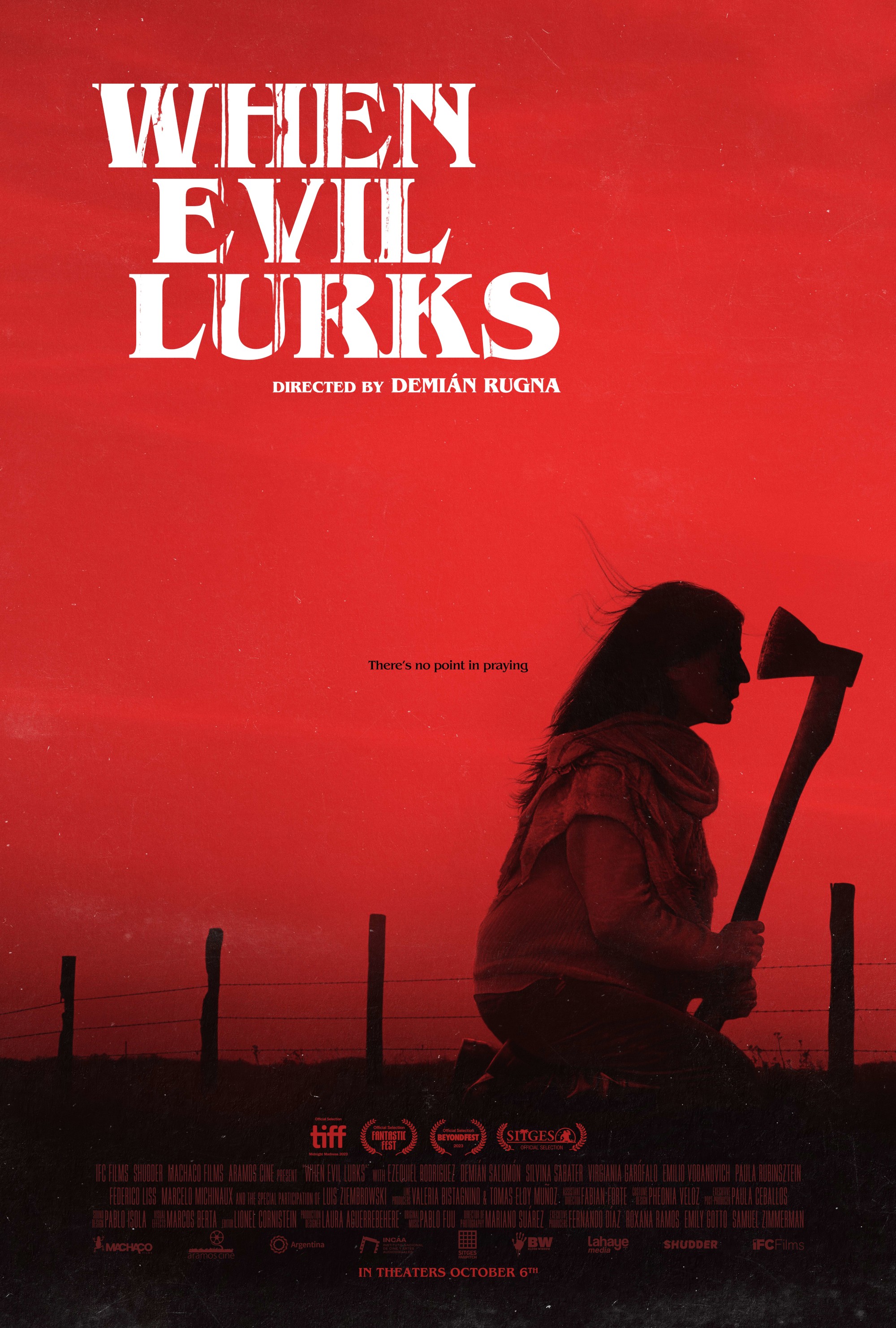
But Demián Rugna’s ‘When
Evil Lurks’ showed again – after his wonderful ‘Terrified’ –
that horror fun never seemed so shocking and serious. Excellent world-building –
apocalyptic possession-virus – and a willingness to Go There and a
number of excellent set pieces showed again that Rugna has a hold on horror
tropes that was raw, sure, sly and committed. …Kids and dogs, eh?
·
Some
low budget gems.
Rebekeh McKendry’s ‘Glorious’
is one of those low-budget horror films that goes where other genres don’t care
about. Set almost entirely in a bathroom, it’s one man against existential
horror for cosmic comeuppance. It’s the kind of grubby roadside bathroom that
you think you will pick up some tragic disease just by looking at it, but
Rebekah McKendry wisely leaves pink as the dominant impression to counter the
grime. Ryan Kwanten puts in solid work and it ends up as if Moorhead and Benson
went Henenlotter. It’s the film’s ambition that sticks in the memory.


Also impressive in the low budget
end is James Morris’ ‘He Never Left’. Starts with an
underwhelming first kill, but as soon as the car boot opens and Colin
Cunningham pops out, the film compels with his performance and a laying on of
other stories and angles running unseen but parallel. Cunningham excels as a
fugitive trying to control his temper one minute and losing it the next, in a
constant state of panic and guilt.
You might be forgiven for thinking that we're
not in the slasher flick the poster promises, but it's that too - even if it
does that diffusing technique of carrying the story right into the credits.
There's a lot to superficially enjoy, but its underlying theme of broken people
due to bad parenting and child abuse - and the fact that one of its endings has
the agents in pursuit of the fugitive lamenting the legacy of serial killers
but not quite catching on - has the film reaching for greater depth and leaving
more than the usual residue by respecting trauma. In this way, it’s also
interested a little in dissecting its own crime-meets-horror genre, having its
cake and eating it.
·
And…
Other films like Joe Lynch’s ‘Suitable
Flesh’, the Bloomquist’s ‘Founder’s Day’, Rob
Savage’s ‘The Boogeyman’, and Jenn Wexler’s ‘The
Sacrifice Game’ filled a Horror-sized hole in a kind of processed
snack way, and very much fleeting, although ‘Suitable Flesh’ certainly
was loud and happy with itself on social
media.
Films like Takeshi Kushida’s ‘My
Mother’s Eyes’ and Teresa Sutherland’s ‘Lovely, Dark and
Deep’ erred on the side of artiness, but they did have art – and in
the former, Grand Guignol; the latter unsatisfying conclusions.

More satisfying in the uncanny
horror was Karoline Lyngbye’s ‘Superposition’. More
failing reality, one of my favourite horror fears. Like ‘Marriage Story’
meets ‘Coherence’, a couple decide to and leave society behind, taking
their young son with them, so they can repair the fractures in their marriage.
This is a couple fully self-aware of their narcissism and privilege in the
modern world, and there’s irony in that they will be blogging about their
off-the-grid experience. But alternative realities have other ideas, and they
are forced to face their marriage problems by negotiating with themselves. As
always with doppelganger scenarios where the definitions and characters get a
little blurred (sometimes deliberately; keep track), there may be a little
confusion here and there, but Lyngbye’s film never loses sight of that
aforementioned privilege and narcissism and what that might mean should a
person be faced with this during a mid-life crises. A true existential,
character study chiller, cooly played and sure-handed.
Modest but ambitious minor efforts
like Ted Geoghegan’s ‘Brooklyn ‘45’, ‘The Last Video Store’,
‘Cold Meat’, and Thomas Sieben’s ‘Home Sweet Home: Where Evil
Lives’ impressed more with their ambition and atmosphere with
limited resources. ‘Home Sweet Home’ was a One Take Wonder but had real
blocking instead of relying upon shaky-cam all the time to cover up what it may be deficient in, and even
strikingly featured a flashback.
After an initial twist, Sébastien
Drouin’s ‘Cold Meat’ emerged as a chamber piece of
killer and victim in a car, stranded in a blizzard, offers two great
performances with a decent script and a lot of enjoyable detail about their
predicament. If the supernatural element seems like a deux ex machina, even if
foreshadowed, with use of Native American mythology a little unsteady, but this
doesn't scupper the good work that has gone before. A relatively smart and
entertaining thriller.
Viljar Bøe’s ‘Good Boy’
only had so many places to go with its premise – a millionaire lives with
Frank, a man dressed permanently as a dog, much to the millionaire’s date’s
surprise – but it kept it vibe of unsettling and uncomfortable throughout, had
fine performances and, even when you knew what it was, it kept itself brief and
ended on a logical, still disconcerting and satisfying punchline.
Cody Kennedy and Tim Rutherford’s ‘The
Last Video Store’ was plenty fun. I often come across comments
where people say horror and comedy rarely works, but I can only assume they
aren’t paying much attention. At FrightFest, the horror comedy is a staple and
‘The Last Video Store’ is another good example. Kevin Martin owns The Lobby DVD
Shop , a real VHS store still hanging on – here called Blaster Video – and
that’s the setting for this showdown with a demonic VHS tape. He plays the lead
too.
A self-aware, self-deprecating
homage, joyful in its own way, armed with only a single beloved location, two
vivid leads and a number of good genre gags. It may not be anything
exceptional, but it is highly likeable, funny and infused with a melancholy that
makes sense of its purple-and-neon hued nostalgia and claustrophobia.

It was certainly less needy than Nahnatchka
Khan’s ‘Totally Killer’. Agreeable enough mash-up of
Time-Travel and Slasher scenarios - although stronger on the latter as it's
free-and-easy with the details of the former. Rather, Sally finds herself flung
back in time to stop the unsolved Sweet Sixteen murders that marred her Ideal
American Suburb. This allows for '80s
nostalgia and jokes about how much culture has changed, at least from what we
know from the slasher era. Yes, Sally is fairly obnoxious and entitled, but
it's easy enough to warm to her as she barnstorms her way through the past like
it's a console game where the environment doesn't question her presence too
much. The humour is that kind where she's constantly talking out of the side of
her mouth to the audience, but there are a few good "wasn't-the-past-different?
gags". It has enough nastiness and twistiness and silliness to entertain, but neither is it as satisfyingly
clever as Blumhouse's 'Happy Death Day'.

A downbeat end note
So maybe all this sounds very
positive, but why not? There was a lot of good watching, and anyway, like
anyone, I mostly watch avoid what I doubt will float my boat. So no ‘Thanksgiving’
or ‘The Nun II’ or ‘The Exorcist: Believer’; or ‘Equilizer 3’
or ‘Fast X’, or… And I’ll catch up with ‘Oppenheimer’, ‘Flowers
of the Killer Moon’, ‘Monster’ (Koreeda), ‘How to Have Sex’, and
plenty others later.
But if you are after something more
negative – and I’ll swing big - Scott Beck and Bryan Woods ‘65’
really missed an opportunity, and Payton Reed’s ‘Ant-Man and the Wasp:
Quantumania’ was so thin that you could pop it with the sharp end
of your disinterest. Superficial stuff that squandered any good will going in.
And so... got a lot of catching up to do.