Wednesday, 9 May 2012

Thursday, 3 May 2012
The Cabin in the Woods

Drew Goddard, USA, 2012
The CABIN IN THE WOODS
(This review is completely full of spoilers)
Count me in the minority of dissenters. When I read a little about ‘Cabin in the Woods’ I was told that it
would not be what I expected, so I stopped reading, thinking there would be
cool twists and surprises. Well, any horror and science-fiction aficionado can
hazard a guess where it’s going from the first five or ten minutes, so there
are no twists or real surprises, just a pop-culture frown at horror and a bit
of showboating.
As a supposed meta-horror about the genre, ‘Cabin in the Woods’ really isn’t very
smart, and therein lays its offensiveness. Perhaps its hypocrisy starts with
our first view of our main protagonist in her underwear. Drew Goddard’s camera maintains
a sleazy eye in order to both capture the sexuality of our tediously hot young
cast – except for the stoner token, of course – and to titillate the easily
titillated in the audience: it seems confused where the line between those two
poles are. Later, our “puppeteers” will urge on one of the characters to show
her breasts, apparently to appease both them and the greater forces they are trying
to appease, who apparently – apparently like the rest of us – want to see her
goodies. In the reality of the film, this greater force is meant to be The Old
Gods. Perhaps it is this that truly defines the film’s deep-rooted silliness. There’s
a cabin in the woods which is a stunning bit of science-fiction-cum-supernatural
construct where a super-secret government organisation has to send young
Americans (and others from all over the world, it seems) so that they can
unwittingly choose from a selection of horror scenarios and die by that choice.
This is done to appease Old Gods, whom apparently want a reality TV horror show
and who will otherwise destroy the world. Old Gods? Really? To my mind, it is
only HP Lovecraft that can pull off The Old Gods scenario. Of course, the Old
Gods are an allegory for the horror audiences’ appetites for blood, human
sacrifice and, apparently, titties and derivative genre fare: it is to this
that we must sacrifice young hot things to nasty horror genre deaths.
“You think you know the story,” challenges the
tagline. Well, any alert sci-fi or horror will work it out early. The problem
is that fanboy favourite Joss Whedon (scripting) and Drew Goddard (directing
and co-scripting) are writing about, and perhaps unintentionally for, a
perceived lowest common denominator horror fan and failing to capture the
complex and sophisticated relationship that horror fans often have with the
genre, one which they are able to engage with various levels of self-awareness.
Worse, the scenarios meant to sate the Old Gods seem to be based upon a post-‘Scream’ American horror template, the
kind where posters and covers for horrors simply have a line-up of young
interchangeable, bland hotties. It is hard to take it as fun and perceptive, or
seriously, when the breadth of its knowledge and feeling of the genre seems to
be based upon television horror, franchise sequels and a story by HP Lovecraft
it once heard about. So we get characters proposed somewhat un-ironically as
‘the virgin’, ‘the whore’, ‘the athlete’, etc. Anything ironic or tongue-in-cheek
about this dissipates when the most sexually active of the victims truly is
considered ‘a whore’, and the idea that, despite a little tweak here and there,
young people really do like to fall into and act out their stereotypes. Adam
Naman writes at Reverseshot:
In Drew Goddard’s new and extravagantly lauded Cabin
in the Woods, a group of sharp, likeable protagonists are forcibly reduced
to generic stereotypes within the film’s storyline to prove some larger point
about pandering to audience expectations.
But that’s not exactly so: the characters start out as annoying types
and then are reduced to cliches. Okay, so the ‘jock’ is also a successful
academic, and for the most part it is “the puppeteers” trying to shoehorn their
characters into stereotypes too, but our young victims really aren’t made that
complicated; they are still as initially brattish as any other tediously
teen-horror. And then, there is the fact that the sexually active woman (who is
capable of giving tongue-sex to a mounted wolf-head) really is considered a “whore”
in the apparent scheme of things, and the film does not seem to realise how
offensive this may be and how it is playing into awful and ancient patriarchal
prejudices and stereotypes. After all, it’s otherwise not clear why the
“virgin” – which she isn’t – doesn’t qualify for “whore” status too. Is it
because she’s less “slutty”?
There is the whiff of contempt for the audience
about all this: despite the amusing asides to Asian Horror - which is ‘Cabin in the Woods’ best gag - and ‘The Shining’ and – most embarrassingly –
‘Hellraiser’, ‘Cabin in the Woods’ presents the most formulaic and worst of the
American slashers as the go-to sub-genre to epitomise horror, and casts its
“puppeteers” as slightly-bumbling and frequently obnoxious bunch who gamble on
the lives of their victims, egg on the girl to take off her top just before she
is murdered and treat all of this as a game. Oh, they protest that the gambling
is just letting off steam, that it is a hard job etc, which is meant to explain
their obnoxiousness, but that’s just waffle. Having a Token Black Character of
Conscience doesn’t help either. Perhaps making horror films under Dimension
Films and the Weinsteins – who always actively demand their quota of tits –
creates the feeling that American horror film makers are just stupid
manipulators playing to the Old Gods of the lowest common denominator, but it
is presenting a woefully reductive vision of the genre, if not the studio
process, and no amount of name-checking other work will elevate this true meta-horror.
It maybe satirising the commercial end of horror, but it’s not quite doing
anyone any favours either. A larger point being made? Well, It’s all
bread-and-circuses is not an especially revelatory footnote. Like Michael Haneke’s
‘Funny Games’, ‘Cabin in the Woods’ represents horror and condemns its
practitioners and product without understanding that they might understand what
they are watching. The Weinsteins’ own ‘Scream’
revealed how horror satire can be both serious, respectful, nodding and amusing
(although according to Peter Biskind’s book ‘Down
and Dirty Picture’, they didn’t understand it one jot and almost tried to
sabotage Wes Craven’s production at first). “Cabin in the Woods” references “The
Shining” and “Hellraiser” without
seemingly realising that those benchmark films were already deconstructing,
reconstructing and setting horror precedents. A fan can look to a film like Norway's 'Fritt Vilt' to show how the genre can still provide solid genre characters and mayhem without resorting to apathy or crassness.
It is hard to truly treat ‘Cabin in the Woods’ as fun or think it has true respect for the
audience when it wheels out the Sigourney Weaver of Exposition at the end to
tell us what we already know. And is it even worth mentioning how stupid the
big-red-button-that-unleashes-alll-the-beasties
is? Maybe TV horror can get away with such shorthand, barely, but in true
cinema, greatness is in the details and credibility. When you have to start
making major allowances for such flaws, there is the hint that all may not as
be as good as it looks. And to be tutted at by Whedon who gave soft horror one
its most famous fan-boy, pop-culture wet dreams: a hot girl who fights
vampires? One must look to films such as ‘Martyrs’
and ‘Let The Right One In’ and ‘Attack the Block’ to witness true
engagement and dialogue with the horror genre. Or perhaps ‘The Monster Squad’ and anything by Joe Dante are better suggestions
if you’re looking for the knowing but softer satirical stuff. Whedon has
provided much better fun. Where is the love in ‘Cabin in the Woods’? Raiding the horror cabinet and tutting a bit
isn’t good enough. ‘Cabin in the Woods’
is meta-horror for ‘Scooby-Doo’ fans.
Surely the Old Gods themselves require better feeding than this?

Wednesday, 21 March 2012
The BBFC and "Eraserhead"
Question: Is the BBFC a condescending entity?
Exhibit A:
BBFC Eraserhead report - 15th July 1979
Bonus question: Is there any evidence of sexism in the BBFC opinions?*
Report summary:
"Well, it's certainly different and well enough made to merit some consideration. Fortunately the only criterion for this report is category and we all settled for the 'X' chiefly because of the truly obnoxious foetus. 14- and15-year old girls ought to be spared that, indeed all pregnant women should be advised of the film's content."

* Please note I used the term 'opinions' rather than, say 'conclusions' or 'verdict'.
Exhibit A:
BBFC Eraserhead report - 15th July 1979
Bonus question: Is there any evidence of sexism in the BBFC opinions?*
Report summary:
"Well, it's certainly different and well enough made to merit some consideration. Fortunately the only criterion for this report is category and we all settled for the 'X' chiefly because of the truly obnoxious foetus. 14- and15-year old girls ought to be spared that, indeed all pregnant women should be advised of the film's content."
* Please note I used the term 'opinions' rather than, say 'conclusions' or 'verdict'.
Sunday, 11 March 2012
Video and Violence: a vendor's tale
The following piece is taken from a work in progress, my pending book "The Gory Id: Killers in Film", and features as a foreward to a chapter discussing "Henry: portrait of a serial killer". I was lucky enough to find a journal entry written around 1992, when I worked in a video store, in which I documented a minor arugument I had had with a customer over the film and whether it was violent or not.
__
__
 Video and Violence:
a vender’s tale
During the 1990s, I was
fortunate to work in what used to be called a “video store”, a phenomenon to be
fondly remembered that came and burnt out over about a twenty-year period, more-or-less.
Or rather, I worked in a newsagent where one corner opposite the greeting cards
and chocolates was devoted to a wall of VHS covers. When VHS came, the impact
on film watching was incredible: it is simply impossible to convey to any
youngster what it meant when video tapes were invented and, after a while,
became widely available affordable to any old household. Or the fact that you
could rent videos overnight from your local store: amazing! Before the VHS
revolution, if you had loved a film seen at the cinema, you would wait a year
or more before it turned up on television; and if you wanted to see it a third
time, you would have to wait another year for the repeat, of you were lucky,
not forgetting that you would have to make sure you were actually home to catch
it. I myself had many nights when I was meant to be asleep for school illicitly
watching films and television with my face pressed against the black-and-white
screen in my bedroom with the volume as low as possible so that I wouldn’t get
caught. Film-watching required a patience and dedication that would seem
intolerable in the digital age. And then there was the Video Nasty period,
which made VHS dangerous too (David Cronenberg knew!). And then people were
recording favourite films and television shows, and so sometimes you had to
make sophisticated arrangements and networks of friends of friends to acquire
that one that you missed on TV last week. And I have very fond memories –
during the nineteen-nineties – of heading across town to the local film fair in
order to buy the films banned by the BBFC: oh yes, I was very excited to have ‘A Texas Chainsaw Massacre’ (1974), even
in its second or third-generation quality. ‘Salò,
or the 120 Days of Sodom’ (1975)? ‘Cannibal
Holocaust’ (1980)? ‘Evil Dead’ (1980)?
Yep, those too and all the joys of acquiring forbidden fruit.
I
recall that the very first VHS tapes in my collection were ‘An American Werewolf in London’ (1981), ‘The Amityville Horror’ (1979) and ‘Eraserhead’ (1976). I was still in my
mid-teens when I got these and since they were all 18 certificates, I have no proper
recollection of how I got them, although I do recall waving ‘Eraserhead’ at my mother to buy for me.
That was a film that had stunned me upon stumbling upon a late night broadcast
when I was thirteen, and to think I was to actually own it was mind-blowing. Video renting was also a delightful
ritual: my local newsagent was also a video store and even though I did not
know that I was to eventually end up working there in my twenties, in my late
teens it was a treasure trove. Any horror fan of the era will tell you about
the joys of browsing those big boxes with the outrageous and nasty covers. You
were going to end up with the cut versions, probably, but those covers
triggered the lurid and fevered imaginations of millions of young horror fans,
creating imaginary horror films that were hardly ever to be matched by the
actual film on the chunky cassette.
And
then, with the advent of video cameras being made affordable and available to
the general public, we started to make our own films too. But more on that
later.
So
I came to work at this video palace, and I grew to know its particular
selection of hundreds of films intimately. There was the excitement of the days
when my boss would bring back new titles from the supplier, or those that were
delivered. What new films would I get to see? And then there was the
disappointment of those he hadn’t ordered that I wanted to see. It was amazing,
for example, when he brought back ‘Henry:
portrait of a serial killer’ (1986), which I had seen in one of its rare,
rare cinematic screenings at the Everyman Cinema, when it had quite traumatised
me. And then I rented it out. There were times I would take home a film every
night, from junk horror to Hollywood Top Titles. Then other people rented it
out, much to my amusement, for I was certain that for the most part that it was
not what they expected.
One
day, a man slapped the cassette of ‘Henry’
on the counter, returning it, and he said, “It’s supposed to be violent, but
I’ve seen more violent ‘15’s.” So I asked him, with quite some tactlessness:
didn’t he find seeing a kid’s head being whacked against the floor and having
its neck twisted violent? He sniffed the answer away. I wondered if he would
feel different if someone broke into his house and murdered his kids (he had
three). He still wasn’t convinced. He had obviously watched ‘Henry’ for the violence and had been
disappointed. Perhaps the BBFC’s cut had been successful in taking out all the
extremities after all? Perhaps his view of screen violence was different to
mine? Oh, I am sure.
But
more than that: that very day, two ten year-old boys from Merseyside had been
in court for murdering a two-year old boy the week before. Their names were Jon
Venables and Robert Thompson. This was the famous Jamie Bulger Case and the
media and the entirety of British society was consumed with it. When the police
tried to smuggle the two boys out of court, the crowd of adults outside
attacked the vans, throwing bricks, threats and expletives after the van and
the kids (and the police?). Soon, the prosecution in the case and the media
would claim that a typical little b-movie horror called ‘Child’s Play 3’ (1991) was inspiration for the boys to kill,
bringing about a second wave of “Video Nasty” hysteria. The after-effects of
the first “Video Nasty” wave still had not passed, and wouldn’t until the
invention and whirlwind effect of DVD. Indeed, ‘Henry’ itself had been in certificate and censorship limbo for
around eight years before I got to see it, uncut, at the Everyman Cinema. But
with the Bulger Case consuming all, violence and children and parenting and
screen violence was very much enflaming the majority of media and national
conversation. Quentin Tarantino’s debut ‘Reservoir
Dogs’ (1992), for example, was a cause célèbre for the pro-censorship and anti-screen violence voices and kept the
topic at the forefront of media outrages (although all Tarantino had actually
done was leave in all the blood that film
noir had previously had to keep out).


And
within this climate where sensitivity to screen violence was high, this man
that I was debating with, having rented and dismissed ‘Henry’, asked me if I had been to the Gallarea yet: The Gallarea
being one of the brand new shiny multiplex cinemas that were suddenly popping
up and sweeping the country, killing off all the local and small cinemas in
their wake. I said that I hadn’t been to The Gallarea – yet – because it wasn’t
really showing the films I liked, and I tended to go to The Everyman in
Hampstead instead. To which the customer pushed up the tip of his nose and he
said, “Snob!” Evidently we were never going to agree on representations of
violence on screen.
Myself,
I was becoming increasingly interested in the subject of screen violence and its
relationship to society around that time. I was convinced that verisimilitude
in screen violence was crucial to a moral representation: the more realistic
and graphic, the more honest and truthful. I had foolishly been turned off by
the hysterical super-violence of ‘Total
Recall’ (1990), for example (later I would come back to it, wiser, less pious,
and relish its absurdity and outrageousness), even though it was a film I
should have otherwise lapped up for its outrageousness (which I did later). I,
you see, was busy watching shockers such as ‘Henry’ and ‘Man Bites Dog’
and the ridiculous and stupid violence of contemporary action films did not
convince me. I felt that they were trivialising a very serious subject. This,
after all, was the glory days of super-violent actioners in the style of Schwarzenegger,
Van Damme and ‘Rambo’ hits. Their
lack of realism and awareness was an insult, I felt as I missed the greater
complexities and representations of screen violence.
And
so it was indeed the verisimilitude of John McNaughton’s ‘Henry’ that met my criteria of the time. And this, indeed, was to
me real horror and real violence on video. And that was before the character of
Henry himself video-taped his killing.
(To be continued in "The Gory Id: Killers in Film")
Tuesday, 24 January 2012
"The Exorcist"... or "the sexorcist" conversation.
 On
a train home after a night out, my good friend Screaming Joe Sangre and I ended
up discussing “The Exorcist”. We talked about how cool Max von Sydow is and how people sometimes missed all the Dick Smith aging make-up he wore; how the Catholic Church endorsed the film, how the foley work and atmospherics were fantastic and how it was far more horror exploitation than some would credit it.
The next morning, Joe texted me, thinking how “The Exorcist” might be: sexist or ‘sexorcist’ in its attitude or play on fear towards female sexuality, female adolescence, etc. (the masturbating and how immoral it is, especially with what she uses [the crucifix]). I would have seen it as more of a criticism on the church’s attitude rather than all the acclaim it’s gotten from the church.
To
which I answered: It is sexist
because it’s earnest and buys into Catholicism, and all earnest religion is
horribly sexist. “The Exorcist” is all about The Men fighting Evil over the
body of an adolescent virgin. It treats puberty as a literal demonic
possession: early sexual awareness and experimentation (masturbation) is
represented as a total (blasphemous) abomination. See also: bodily discharges
represented as disgusting pea green soup-vomit. Once the priests have martyred
themselves during exorcism, the girl returns to a pure, virginal state with no
memory of events (what, no vaginal damage)? What she’s being purged of is dirty
language and early sexuality – i.e., female maturity and independence.
I
never saw “The Exorcist” as critical of Catholicism, and certainly what I have
read around it seems to imply that Freidkin (director) and Blatty (writer of
original novel) both buy into it seriously. The Vatican has endorsed this film,
which shows that (a) religion has a taste for horror, which is no surprise, and (b) they probably
wouldn’t know how to see the film as a black comedy too. It is a fantastic
horror, indeed, but I buy into its premise as much as I do “The Omen”. I do
reserve the right to change my mind upon a fourth or fifth viewing of “The Exorcist”
in regard to its earnestness (my memory does not store any impression of the film
being critical or) and as far as relgious horrors go (I don’t buy into them), “The
Exorcist” is probably the best, which is ironically the result of the very
earnestness that I likely distrust.
And
then I told Joe that he really has to see “Martyrs”.
Wednesday, 11 January 2012
Buck Theorem's "The Third Monster and other oddities"
“This compilation contains 20 tales of mystery, horror, fantasies, monsters, nightmares and dreams. Ghosts both vengeful and sorrowful. Vampires of autumn and cinemas. Murderers who are terrible, horribly young, and occasionally bizarre. Strange big cats stalking dreams and suburbia. Living dolls hunting victims. Schools haunted by bullies. Desert castles and the living dead. Unusual holiday resorts and graves with relentless appetites. In the realms of the uncanny, you shall find all the oddities you could care for.”
THE THIRD MONSTER AND OTHER ODDITIES
Here is my second book of fiction. This one is one of those collections of horror and mystery and, I admit it, abit of whimsy, the origins of which lies in a couple of horror anthologies that I wrote when was between, perhaps, ten and eleven. I have always remembered a few of the stories that I wrote as a child for those collections and those stories appear in “The Third Monster and other oddities”, as well as a bunch of others that come from my youth, dreams and up to the zombie fads of the Twenty-First century. My affection for horror and the bizarre is life-long and shows no sign of going anywhere yet.
The joys of self-publishing haven’t lost their novelty as yet, so I hope you would enjoy this bit of nonsense, should you buy it from Lulu.


Friday, 23 December 2011
2011 - Best films seen and general notes

Here is a list of the best films that I saw over 2011:
ATTACK THE BLOCK (2011)
13ASSASSINS - more below
UNCLE BOONMEE WHO CAL RECALL HIS PAST LIVES (2010)
– glorious oddness. This is how magic-realism should be.
DRIVE (2011)
I SAW THE DEVIL
- Nasty and compelling serial killer/revenge flick that quite takes to task the vengeance motivation of most action narratives. Both gimmicky and deeply troubling.
DEEP END
- Fantastic 60s coming-of-age story with a wonderful swimming pool backdrop. Made me think of how few films there are about the experience of getting your first job.
A ROOM AND A HALF
- Visually stunning and sumptuous, stuffed full of detail and fancies and even a fantastic animated sequence. The sequence where pictures in a food book come to life is one of the most dazzling and sumptuous visuals I have seen in ages.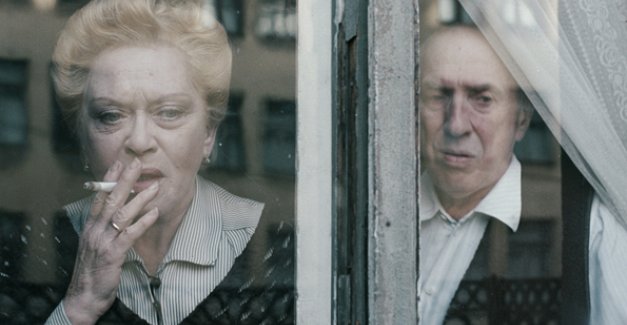
TINKER TAILOR SAILOR SPY (2011)
– stunning plot and made as if for adults! Tomas Alfredson is definitely a name I shall get excited about whenever it turns up.
STILL WALKING (2008)
– instantaneously one of my favourite domestic dramas crackling with unresolved tensions and the things that make families tender and shocking all at the same time.
THE PAGE TURNER (2006)
– icy French revenge domestic drama. Cruel and wonderfully performed.
And honourable mentions...
THE BURNING (1981) – a consummate 80s slasher. The lingers in the memory as a far better film that it probably is, but then again: the raft scene.
BLACK DEATH (2010) – an unsual horror which end up being a pitch-black character and social study.
MONSTERS (2010) – don’t let the title misguide your expectations. As a low-budget invented-from-nothing exercise, and as a portrayal of how people might live at the edges of a world taken over by a science-fiction premise, this was quietly stunning and original. Also perhaps the best romance I've seen in a film for a long, long time.
GORGO (1951) – the final act with Gorgo stomping all over London is fantastic and the match for any albeit more realistic contemporary effects sequences.

Yes, I know what I just said about the effects, but the destruction caused by Gorgo is very, very impressive, I assure. It's just that his model head isn't quite as great.
INTERPLANETARY (2008) – winning and funny low-budget sci-fi filler in the style of “Dark Star”
THE KILL LIST (2011) – oh, it definitely gets under your skin. Stay with it. Probably an instant classic.
SALVAGE (2009)
SEIGE OF THE DEAD (2010)
– because I like films that are about realistic people dealing realistically with impossible horror situations.
THE SAILOR WHO FELL FROM THE SEA (1976) – which is just very odd in and particularly English way. Probably misguided as a Mishima adaptation, but something about this kind of ‘60s British cinema remains quite uncanny and bizarre. They just don't make beguiling bafflements like this anymore.

The two films that I saw at the cinema that truly surprised me and blew me away this year were “Attack the Block” and “13 Assassins”.
Oh yes, I know that “TREE OF LIFE” (2011) is meant to be THE one, but it was broadcasting its own greatness so loudly that I just nodded and went on to others that genuinely surprised. I did not feel that the entirety of cinema had been reinvented just because Terence Malick had created a gorgeous stream-of-consciousness cinematic family album with some science-fiction pages thrown in for good measure. I thought the birth of the universe sequence was ravishing. I thought the family drama that takes up the centre of film was far more linear than I was given to expect, that it was pretty and as stirring as a fine piece of prose. I felt, as I was always bound to, that the religious symbolism was daft and stunted. Like all great art that gestures wildly at that very greatness, threatening narcissism, it seemed to think religious iconography was incisive and enlightening instead of obvious and narratively trite. This was not really an investigation into the faith of its characters for it was far too obtuse and, shall we say, airy-fairy for that. It is exactly the kind of film that critics can love because it allows them to wallow in the sound of their own voice (yes, yes, me too). It’s characters, aside from its Brad Pitt dad and the Malickesque son, were woefully two dimensional. People seem to go on about the mother’s “grace” as if that is all she needed: gestures and reductive symbolism over genuine characterisation. The third act also had the sound of collapsing in upon itself and leaving the audience behind as it turned deeper into naval-picking. On the other hand, as a cinematic evocation of memory in action, “Tree of Life” was a wonderful indulgence.
I was equally impressed with Gasper Noe’s “Enter The Void” (2009), which I was fortunate enough to see in the same week as Malick’s film and which I felt to be the evil twin of “Tree of Life”. That is, it was a film that relied upon a slender narrative to explore, with highly stylised and stunning visual conceit, its mostly abstract characters. Both films were extremely dreamy, indulgent, pleasurably overlong and frequently breathtaking. “Enter the Void” also offered a knock-out opening credits and first act. “How did they do that?” frequently came to mind.

Lars Von Trier’s “Melancholia” (2011) also offered a flip side to “Tree of Life”, as well as a stunning opening sequence that matched Malick for beauty and stylisation. Trier is a deeply compelling and divisive director and can really excel and transcend as few others can. His “Europa” remains one of my favourite and one of the most visually daring films I have ever seen. Around the time of “Breaking the Waves” and “Dancer in the Dark” – the latter which I really like, not least for Bjork’s overall contribution – he decided to use female emotional and mental instability to convey his own depression and, yes, melancholia. I am adverse to the somewhat misogynist conflation of female emotional and mental instability and especially that they are also transcendent in some manner. Von Trier is ordinarily saved by some excellent performances, and “Melancholia” hosts a number of great character turns, no matter how silly some of it may be. Its sense of narrative timing is timing – try to put the melancholic Kirsten Dunst’s disintegration on her wedding day on some kind of clock and see whether it seems possible – and if you do not take to the film, you can shove a planet through its weaknesses. But its weaknesses feel more like punk, just as Malick’s feel like classical. However, the cosmic symbolism and frequent beauty and the sheer audaciousness of the ending (not to mention ambiguity: futility or final understanding) makes this a fascinating watch.
Again, “Black Swan” (2010) was problematic for me for seemingly presenting psychological ill health with transcendence. Of course, it was a slummy giallo horror in a tutu and since people tend to prefer their horror in fancy garb and their female performances in meltdown, not to mention some obvious symbolism, it generally went down well and crossed over into the mainstream. I shall probably enjoy more it a second time around when its pretentions and craziness can be laughed at and enjoyed just like any other b-film.

Similarly, I always want to enjoy Pedro Almodovar films more than I evidently do. Something about the way he makes rape and murder as casual as his excellent female leads put on another dress or make lunch feels too divorced from reality to work for me. A kind of camp regard for all things taboo, but not quite with the same revelatory or satirical rewards as in the work of John Waters. Nevertheless, “The Skin I Live In” (2011) was a far more successful body-horror and ‘mad doctor/scientist’ film that Tom Six’s flat joke “The Human Centipede”. “The Skin I Live In” was a kind of camp Cronenberg-lite, but that is not a bad thing. The consequences of mental and emotional suffering were all over Almodovar’s tale of gender and trauma. It still did not possess the same stunning narrative pyrotechnics and rigorous plotting as “Bad Education”, but it was a fine b-movie horror that, despite its crass elements, was likely to provoke at least cursory thoughts about sexuality and how it defines us.
“Tyrannosaur” (2011) was quite the horror film in its British miserablism. Although well acted and filmed, it seemed to wallow without insight. It did possess a stunning performance by Olivia Colman, though.
I suppose “Hugo” (2011) appeared on a number of end of year top 10s because, well, film fans seem to enjoy films that trumpet how great film it. Or magical. I don’t really trust that Disneyesque or Speilbergian co-opting of that term “magical” because its feels like propaganda and earnt by cheap sentimentalism. It nearly capsized “Super 8” and nearly smothered “Hugo”, but not quite in either case. “Hugo” is too long: once it stops blaring about itself with big budget production and smothering the audience with visual pyrotechnics that serve no use to the small story at the centre, once it stops this and gives us a truly beautiful montage of George Georges Méliès going about the business of making and directing his silent films, the film has already past the point of being riveting and is very much a lot of pulling bunnies out of hats because the story has become inert. Nice, but that’s it. Also perverse: paying homage to the silent film era using crass and distracting 3-D.
“Super 8” (2011) was also a bit too in love with its own movie-ness. Fun, well made and mostly brought down to earth by its engaging young cast rather than the script. Also, a missed opportunity, surely: a CGI effects bonanza when actually the best moments of the film are when the kids are making their own zombie film on Super 8. The end credits Super 8 movie kinds puts all the giant monster and sentimentality to shame.
“Troll Hunter” (2010) was probably the best monster flick of the year. It also had the best scenery.
However, for amusement and nasty fun, Dick Maas's "Saint" (2010) had a lot going for it, not least of which was one of my favourite spectacles of the year: a demonic Santa Claus riding across the rooftops of Amsterdam on a horse.
“Drive” (2011) equally was less than the eye saw, but nevertheless a great piece of hokum and the kind of film that seems to have slipped from view.
“Thor” (2011) and “The Rise of the Planet of the Apes” (2011: clumsy, desperate title) were entertaining and diverting but disappeared into thin air upon reflection. The cinematic equivalent of a bag of crisps, I guess.
“The Thing” (2011) was good fun and did well to pretend it was more than just a cash-in. Mostly it did this by not having totally risible dialogue and characters who actually seemed to be thinking. And no, the CGI effects did not transcend those of the Carpenter film.
“Insidious” (2011) was appalling, despite a first half containing an excellent sequence of scares and great creep-outs.
Much, much better was “The Awakening” (2011) with its haunted school backdrop, elegant performances and direction, even if it ended up biting off more than it could chew.
Even better was Ti West’s “The Innkeepers” (2011), because its two central characters were some of the best ever put in a potential haunted building and for its patient development of eeriness and, yes, sadness and ambiguity.

So, for me it was “13 Assassins” and “Attack the Block” that truly rocked my world.
“13Assassins” (2010) reminded me of why Takashi Miike is one of my favourite directors.
“Attack the Block” came months before the London 2011 riots and it seemed to me to be the only British film that was tapped into the current social discontent and pending violent outbursts. Where was the other realist films truly and imaginatively conveying the alienation and barely repressed malcontent and, yes, conversational fun of kids on council estates (ghettos?). Beneath a daft alien invasion monster film (great, scary aliens!) Joe Cornish’s film turned a council estate into a visually arresting box of traps and spoke up on behalf of the generation of youths disparaged and hated by tabloid mentalities as well as holding them to account for their own wrong-doing. The more our protagonist Moses gains a conscience, the greater the number of aliens to battle. You didn’t have to think the film had any deeper level because it was also funny, nicely constructed and frequently genuinely gorgeous to look at. As a kind of kitchen-sink-drama-meets-Joe Dante experiment, “Attack the Block” reminded me of just how powerful genre symbolism and playfulness can be. I am aware that there are many that think it's just a silly monster movie. However, my love for this film is quite boundless.
Sunday, 16 October 2011
DRIVE
 .
Nicolas Winding Refn
2011, USA
The turning point of Refn’s appropriation of Walter Hill and Michael Mann aesthetics, “Drive”, is surely the one scene that I initially felt to be the most problematic. The elevator scene seemed to me to encapsulate Andrew Tracey’s [Reverseshot] main objection to “Drive”: namely, it’s silliness. It is indeed the same silliness I felt afflicts some of the work of Michael Mann, whose male angst and posturing I find so unintentionally amusing (less damaging in “Manhunter”, but fatally marring “Heat”, for example). This glossy emotional gesticulating feels very much like the moody soft-pop-rock that Mann so favours on his soundtracks: appealing, easy, but ultimately shallow. Refn, too, uses an electronic soundtrack, a wonderful, retro-feeling Chris Martinez score. There’s also a silly but endearing song about heroes. However, one should not be misled that Refn is coopting Mann’s taste: throughout his career, Refn has utilised excellent, distinctive soundtracks and song choices (less self-satisfied than Tarantino; less soppy than Mann).
That pinnacle moment, the elevator scene, is where the soundtrack takes over and the movements of the characters fall into slow-motion to emphasise its poignancy. The driver and his love interest have just got into an elevator with a man who the driver knows to be a hoodlum sent to kill them. Now, at first the silliness seems to be in the way that the driver stops to steal a deep, long kiss in slow-motion rather than just deal with the hoodlum whilst he has the element of surprise. It is such a moment that critics in love with gestures rather than realism or character pragmatism really take to and buy into the sign-posted poignancy. If you are to read “Drive” for its gestures, then will probably be the great romantic moment, and certainly this is how Matt Bochenski [*littlewhitelies] reads it, without ambiguity or irony. He says, “Driver kisses her before turning on the other man. It’s a moment of exquisite and contradictory emotions – love, atonement, vengeance and rage – coalescing and combusting with startling ferocity.” Similarly, James Hansen [*Out 1 Film Journal] reads the driver as heroic. But this now brings to the controversy of “Drive”.
There is the amusing tale of the woman trying to sue the film distributor for leading her to believe she was going to see another “The Fast and The Furious” film. Well, entertaining as that is, one can see a certain point: when I first saw the trailer for “Drive”, I was as disinterested as I ordinarily am with any trailer going through its tedious litany of clichés; but then I saw it was directed by Refn, and I was interested, certain that it was being misrepresented, mispackaged. Which it was. Because the car chases are probably not what you are going to remember about “Drive”. One might even wish there had been more footage of his stunt driver work, and his heist work. But no: what likely to remember is the violence, because when “Drive” lets loose, it is extremely crunchy and violent. I see this again as further evidence of how the influence of ‘extreme cinema’ of the preceding decade has trickled upwards into more mainstream titles. Many of its detractors have turned aggressively against “Drive” in response to the shocking violence.
But it seems to me that the driver is not heroic, although he is an anti-hero. He is not simply romantically detached or mostly alienated from the world around him, in the old school manner of stoic, mostly silent troubled men of action who, nevertheless, live by a code. He is - as apparently Ryan Gosling also feels - psychotic. We know this as soon as he responds relentlessly, consummately during the motel attack. He has preternatural abilities with violence when under assault. This then is why he is detached and sits at home playing with car parts, but then he gets somewhat gets involved with the girl next door and her son. He seems to be eying romance and the domestic with longing, but he knows what he is. He is, after all, a getaway driver for unpleasant people. He knows: and so when he kisses her in the elevator, even though this seems a ridiculous thing to do when under threat in close confines, he does so because he knows that when he does indeed attack the hoodlum, any chance he has with her will be gone because there shall be no disguising that truth about him (and perhaps if she does accept what he is, perhaps she isn’t his idyll after all). And indeed, the head-stomping is horrifying, and it is not abbreviated; it is excessive in a way that goes beyond self-preservation. It is psychotic. And she stands there and watches and she sees what he is and what he is capable of. And for this reason, I came to change my mind and believe that the elevator scene was the pinnacle of the film, and that it did indeed work after all. We may revel in the driver’s ability to best the bad guys with violence that matches if not supersedes theirs, in the manner that we revel in power and revenge fantasies, but it is also psychotic and surely does not meet the criteria of heroism. It is, like much of Refn’s oeuvre, another portrait of an incredibly, horrifying violent man trying to hold things together. We see evidence of this from his first feature “Pusher” right through “Bronson” and “Valhalla Rising”. And he is very good at painting these portraits, however similar thematically, through varying shades of different genres. Here, the stripped down romantically inclines thriller gives his violent man tale a pretty and soft veneer with a shattering centre. Some may see the driver as Steve McQueen cool, but that surely is not the truth of it. (And all this and the accomplished retro-feel, one can only imagine what Refn might have done, or could still do with Brett Easton Ellis' "American Psycho".)
 Refn sees “Drive” in terms of a fairy-tale, which implies that those metaphysical and symbolic gestures are actually treated in earnest. Refn directs both stylishly and bluntly so that the effect is disorienting, as if the sleek gloss of ’Eighties Hollywood never went out of fashion, but interrupted by the shock of recent extreme cinema. It is like Scorsese, Mann, Walter Hill, Gasper Noe, Takashi Miike are all being shaken in a cocktail glass of blood and grue. The characters are indeed mostly ciphers and that is mostly the point. Carey Mulligan, for example, is just a pretty porcelain face and little else, and perhaps her vapidity – unconvincing as she is as a single mother – is what attracts her to the driver. (And she, too, is a mostly wordess character flirting with violence, as her attraction for the driver and her just-out-of-jail husband hints; what does she see in them?). And “Drive” may well also feature “Ron Perlman, giving perhaps his first bad performance” [*A. Tracey] But its silliness is more to do with the fact that Refn’s film has everything to do with cinematic reality, gently nodding at archetypes so hard in order to make them totems and symbolic, not only clichés. It’s more in tune with the real world than Tarantino or your average Hollywood actioner, but only by a matter of degrees. It is the style, the mood, Ryan Gosling, the everso-slightly dreamy momentum and indulgences that make “Drive” transcend its pretensions and clichés. It is like a New Wave synthesiser being smashed up with a punk guitar. It’s a bloody marshmellow, a beguiling bone-based cake that allows a fan to give in to cinematic artifice and the pleasures of a typical genre piece told with just a touch of dazzle and insight. In that way, “Drive” is probably both less and more than it seems and as engrossing and dazzling piece of artifice as you are likely to see in the post-noir era.
Don't Be Afraid of the Dark
 DON’T BE AFRAID OF THE DARK
Troy Nixhey, 2010 (USA-Australia-Mexico)
Anyone troubled by thick shadows and impregnable darkness need not really be worried by “Don’t Be Afraid of the Dark”. Troy Nixey’s adaptation of favoured 70’s TV movie horror of the same name offers up Movie Darkness, which means that we barely ever get real, pitch darkness. The darkness that is offered is often inconsistent; for example, the basement – surely meant to make the title really something to worry about – is brightly lit and the creatures are mostly glaringly visible in dull light; which also negates the whole they can’t stand the light clause. After a prologue featuring a crowd-pleasing teeth assault (the audience I saw this with were audibly delighted and troubled) the film skips through it’s clichés cheerfully enough without doing anything new or damaging: whispery voices; a bathroom assault; bad dialogue; something under the dining table at daddy’s big business meal; characterisation that never goes up a gear; no one believes the troubled child, and so on.
The girl – Sally (Bailee Maddison) – is the troubled and precocious mini-Goth soul of divorced parents; then mum sends her to stay with dad, multiplying her alienation and sense of rejection, which manifests in moroseness and tearful outbursts. Courtesy of the big name associated with this production – Guillermo el Toro had a hand in the screenplay and production – Dad (Guy Pearce) lives in a huge, gothic old house that he is restoring with his new interior designer girlfriend (Katie Holmes). We do not really get a grand tour of this remarkable building as the action is mostly confined to a handful of rooms, so our sense of its size is mostly limited to its impressive grounds and exterior shots. Nevertheless, within five minutes, the girl is finding the basement that no one else has noticed and hearing voices saying they want to play with her and that her parents do not love her. In truth, Sally seems a bit too smart and aware to fall for this ruse, but in no time she is heading into the cellar all alone and so on. The homunculi – who like to eat children’s teeth especially (a better use of the Tooth Fairy myth than “Darkness Falls” [2003]) – act increasingly aggressively, and for a moment they are mischievous and give the film its one truly gleefully macabre moment: they manipulate a toy teddy bear to make the girl think it is alive. But dad is too preoccupied with reviving his career to pay full attention to her monster tales. Meanwhile, potential step-mom is increasingly concerned at her boyfriend’s blinkered treatment of his daughter and starts to befriend Sally. A little feminist bonding gives the staid characterisation some lift and colour. Step-mom starts to investigate Sally’s story and luckily, inevitably, inexcusably, there is a Librarian of Exposition to put into place that this may all be the fault of ancient fairies, etc.
In the end, impressive set design only goes so far as compensation for a really tired narrative, and a constantly gliding and faux-showy camera cannot disguise that tiredness. Worst of all, the film is sloppy with details: does that pretty bedside map casting eerie horses on the wall play music all the time or just sometimes? There’s a monster arm lying on the floor… does no one notice? Or, as Unkle Lancifer says: “the film’s largest break from known reality involves not fairy monsters but a magical Polaroid camera that never runs out of film.” (*kindertrauma) Del Toro’s customary fairy tale trimmings are nice without really bringing more than nice décor and some colourful backstory, the kind that his Hellboy deals with before breakfast. As Lancifer wisely notes, “Don’t Be Afraid of the Dark” would work better as a PG horror, and the teeth chiselling that starts it off seems more tacked on in order to bump up its superficial horror ratings credibility. Ultimately, the camera can’t stop gliding, there is little stillness or true darkness to truly unsettle and the most troubling and perhaps daring result of the film is that the stepmother is undeservedly sacrificed to sate these manifestations of the child’s latent fury and resentment at her situation. Shame the film is too shallow to make the most of this genuinely chilling subtext.
But it is true that the homunculi are spooky and steal the show.

Friday, 26 August 2011
KM 31: Kilómetro 31

KM 31: Kilómetro 31
Rigoberto Castañeda, 2006, Mexico-Spain
This starts off decently enough, helped by a drained colour palate where everything is moody greys and blues and helped by a lot of black. Woman driving home through a deserted country road appears to hit a child, but the child isn’t dead… and then she is. Perhaps the Twin Sisters With Psychic Bond and Dark Past ought to be a clue that we might be in trouble, viewer, but it is only really when our troubled protagonist and her man run into The Old Lady of Exposition that it becomes clear that “KM 13” is a total mess of plot, has lost its sense of foreboding for increasingly cheaper shocks and effects.
Oh, and the old lady is a ghost, which insults so much and is so obvious that any viewer is likely to go from mild curiosity to openly snorting at the unravelling narrative and suspense, such as they were. Indicative of the overall sloppiness is how one moment they are running out to the haunted road, and the next they have to take cars and taxis. And the lighting becomes similarly arbitrary: the woodland is dark one moment and then impossibly lit by Kleig lights the next. And what is the point of having a sewer showdown if it’s lit to banish any hint of shadow? The showdown is moreorless the protagonist standing in the sewers staring at desperate special effects, the kind of ghostly visions that were the highlight of ropey old “Ghost Story” and a hundred derivatives, but are so rote and badly presented here that there is not even any room to enjoy cliché or take it as so-bad-it’s-good amusement.
Sunday, 31 July 2011
BROTHERHOOD

BROTHERHOOD
Taegukgi hwinalrimyeo
Je Gyu- Kang, 2004, South Korea
We start by literally digging up the history of the Korean war: an excavation of a battlefield is underway. Everything is as straightforward as can be; we know where we stand and the conventions are all in place (at the very lest, Spielberg’s war epics shall be good indications of what’s to come). Triggered by the excavation and the search for a battlefield survivor, a flashback returns us to 1950 at the outbreak of the Korean war. Grand period street scene recreations abound, against which our two protagonists, the brothers, dash around as the score flourishes. All very Segio Leone, very Bertolucci, etc.
“Brotherhood” is a struggle between the overwhelming achievement of its battle scenes and the overwhelming forces of its melodrama. The latter provides an almost perfunctory framework within which the former can operate. The melodrama of the tale of two brothers coerced into the Korean war runs along emotional and narratively contrived and predictable lines: it starts out all “Once Upon A Time in Korea” with the immense street scenes epic in detail and nostalgic in tone, for we join them on The Perfect Day Before Their Lives Changed Forever. We know that these opening scenes will come back as flashbacks later on in more fraught times. One brother – Jin-saeok Lee (Bin Won) - is an academic, and the other – Jin-tae Lee (Dong-gun Jang) - is a ‘rough’ streetwise shoe-seller. Later, there shall be a lot of sentiment over both symbolic pens and shoes. So rich is their environment and set design that the obviousness of what the narrative is doing and what is being set up is secondary. The broad strokes may make Je-Gyu’s film undemanding, but the details frequently keep it compelling: the maggots on casualty wounds; the starvation; the way the young men are duped into being drafted into the army; the confusion and in-fighting about who, exactly, is the enemy. Even better is the way Je-Gyu frequently shows how the epic qualities of war, with which we are all acquainted from cinema, is always reduced to hand-to-hand combat: the melees remind us that this is not only about a bunch of extras and dummies flying around in the distance to frightening and thrilling explosions, but also the messy, chaotic, free-for-all man-to-man combat that leaves life a second-to-second business. So visceral and intimate are these masses of fist-fights of the first battle scene – so brilliantly achieved – that by the end of the first hour it feels as if “Brotherhood” is already done, having fulfilled its quota.
But there is a further hour and a half to go. The rough brother is corrupted by war, by his own heroism, even as his pen-pushing sibling walks through unscathed much like an untouched virgin in a brothel. Je-Gyu appears to be trying for something mythical, totemic and/or archetypal in this tale of brotherly love driven apart by war, but all this seems to mean is that the melodrama increases without ever straining convention or anything nuanced. We also get many more battle scenes, and these often take the breath away. In their insistence and persistence that epic battles are always ultimately about a mass of men pounding and stabbing away at one other in trenches - thrashing around on top of each other in total desperate and murderous mayhem with very little rhyme or reason other than to stay alive - the battle scenes are as consummate condemnation of war as any you are likely to see. Jin-tae is a virtual superman in his heroism, seeming impervious to hails of bullet at times, and yet Je-Gyu never wallows in the dubious victories of war. The soldiers and streets may celebrate, but after the first victory party, these celebrations seem to become hollow and tired and by rote. Their propagandist nature rises to the surface with repetition. But “Brotherhood” has its own agenda of sentiment and by the final battle this has drowned those smarter details and, like so many war films, reduces the huge horror to a [sibling] love story, to the detriment of insight.
“Brotherhood” probably isn’t much of a digging up of Korea’s history of conflict - I certainly learnt nothing specific about its causes and complexities, although mass confusion at gound-level seems a reasonable estimate of life during wartime - and there is certainly merit in dragging it to the heel of human tragedy, to the individuals and families torn apart. But arguably a clear and less fevered eye is more instructive and so “Brotherhood” feels classic only in the way that classics may have once relied too much upon sentiment and a grand scale to avoid politics and insights (for example: Eastwood’s “Letters From Iwo Jima” provides a similar but cooler and more incisive comparison; “Brotherhood” is more like “Flags of Our Fathers” in its reliance upon nostalgia and over-cooked pathos). But there is a lot of terrible truth in those numerous battle scenes and it is those that will leave the viewer breathless, shaken and hugely impressed. The actual tale of brotherhood evaporates in a explosion of melodramatic cliché.
13 ASSASSINS
 13 ASSASSINS - Jûsan-nin no shikaku
Takashi Miike, Japan-UK, 2010
I know that for a Western audience it is ordinarily “Audition” or “Ichi the Killer” that acts as their introduction to Takashi Miike, but for me it was “Visitor Q”. It was “Visitor Q” that truly told me that Miike was a master of not only shock cinema, but cinema and genre overall. What an induction. The most incredible social satire, a real funny and unapologetic shocker. Miike famously has an incredible output. 50 films to date and counting or something. He has tried everything. And he can do anything. Working your way through his back catalogue will take you from the sublime, the manic, the carefully crafted to the more workmanlike. But even at his most prosaic – “One Missed Call” and “Bodyguard Kiba” – there is always evidence of Miike’s barely tethered inventiveness, always at least one remarkable moment. If I say he is a master of genre, then you may pick any genre that you favour and he has set a precedent in it. He understands genre. His is an incredibly gonzo imagination but he also possesses great discipline and exceptional artistry.
.
Take for example Miike’s adaptation of Eiichi Kudo’s “The Thirteen Assassins”, the 1963 shogun film. Miike’s “13 Assassins” starts with a episode of seppuku which is no less gruelling for the act itself taking place offscreen: Miike trusts that all we need to see is the actor’s tortured face; and yes it is enough. But this is also not to say that Miike will hold back from shock and explicitness. Soon, we gaze upon a traumatised woman whose limbs have been cut off by the insane Shogun lord. Next, we shall see this lord using a family as target practice. Later, the blood will flow. And how. There is a steady and pensive nature to the first half of “13 Warriors”, in which the chilling atrocities carried out by the Shogun lord - Lord Naritsugu (Gorô Inagaki) - have time to ferment. This is a villain of incredible vintage. His cruelty is boundless and moored to his philosophy that to be a Shogun is to be a God, that cruelty is the natural right and extension of the absolute power he possesses. It is a power buffered by the way of the samurai who do his bidding, who must die for him and never question why. “13 Assassins” has much to say about the atrocities allowed by rampant feudalism and blind obedience. The themes of the film are timeless just as the film feels timeless: it already feels like a classic.
.
.
The inspirations and references are easy to conjure – Kurosawa, etc – but, again, Miike’s mastery of genre is unsurpassed and all his own. We have 13 assassins even before the wealth of side characters that populate all the political intrigue; but Miike knows that we know the nature of this film, that we know our Kurosawa and Leone and Ford and all those other classics. He knows that he can sketch the assassins with hints of stock types and allow fine actors to bring them to life and that shall be enough for the audience to keep track. There is no need for flashbacks and great back-stories, although we get a little of that also. The beginning is the slow burn: our villain is vile, our assassins assembled, our blood chilled and the atmosphere thick with pending confrontation. Miike allows the superficially slow pace (a repeat viewing will reveal that, in actually, it is not so slow and that narrative is delivered in a number of swift set-pieces with often underplayed and straightforward drama) and the dour, low naturalistic lighting to cast a doom-laden, almost uncanny atmosphere, and expectation for the confrontation builds on and on.
.
The way of the samurai is dying away and, most of all, these samurai want a last chance to use their skills and die by the way of the sword, as they wish. There is a lot about honour and choice in “13 Assassins” too. Even for the youngest member who merely wants to get the chance to try out his skills and die like his heroes. There are a handful of stand-offs to whet the appetite and some gorgeous photography to keep us gripped as expectation mounts further.

And then … and then Miike offers us something sublime. A battle that takes half of the film. A battle in which he unleashes all the repressed violence that has been building up. A battle that relishes the old fashioned cinematic joy of a handful of heroic types up against impossible odds (and it feels joyously far from the macho-heroics of American action cinema). A battle that is built not from CGI (although probably that too), but collapsing sets, giant gates, hundreds of extras, lashings of blood and, exhilaratingly, burning and rampaging bulls. It is one of the greatest battle scenes ever filmed. If it sometimes falls into the modern trap of action conveyed by a shaking camera and too many cuts, threatening incomprehensibility at times, it also follows the battle over rooftops and through streets, alleys and buildings and with the thirteen assassins without ever truly losing us. It is quite remarkable and thrilling. Also remarkable is that throughout this cinematic exhilaration, Miike never loses the sense of doom, of the themes already established, of existential musing on what it means to die for something - blindly or knowlingly - of choosing to challenge the wrong of the established order and hierarchy.
.
I never thought I would see a new Miike film at the cinema (he makes so many and they generally bypass the London big screen), but I did and I was reminded why he is one of my favourite directors. I knew, when the battle scene began, that I was in the midst of watching a masterpiece. Having deliberately avoiding reading anything about it, the battle scene surprised and dazzled me. But all the time, I knew that the whole of the film was so much more. An instant classic. It straddles everything that has been celebrated about classic cinema with all the artistry and tricks of modern cinema, much like “There Will Be Blood” and “The Assassination of Jesse James by the Coward John Ford”. The quiet of the aftermath and the slightly sly humour and final sentiment of the closing exchange between survivors continues to elevate the film to the very end. The bloodletting and the samurai code is finally dismissed and mocked even as the honour and sacrifice of our eponymous heroes is respected and makes the viewer wonder what it is to die for duty. Or, as Nick Schager summarises, “Miike isn't interested in shades of gray, but rather in celebrating the dignity of forfeiting one's comfort and livelihood (if not life itself) for a worthy cause.”
.
“13 Assassins” is delirious, mad, elegant, thoughtful, cathartic, dazzling in scope, funny, gritty and brutal. It feels both like art and pure cinema in that is luxuriates in spectacle, storytelling and man’s confrontations with himself and others, and his place in the universe and the natural world. Another Miike masterpiece.
Subscribe to:
Posts (Atom)