
Film
comments 2024: Lady parts
For films that talked about lady parts, there was none moreso than Yorgos Lanthimos’ ‘Poor Things’. If at first it seemed dangerously close to a male fantasy of creating and maltreating a child-woman, riffing on ‘Frankenstein’ and classic picaresque, it soon became apparent that this is not a ‘Weird Science’ fantasy but more musing on nature and nurture. Ditching the unreliable narrator element of Alasdair Gray’s novel, among other aspects, it offered a romp through the picaresque – also overlong, which is a feature of the form – with a feminist slant. Although I had friends that thought Emma Stone was mostly just over-acting instead of good – which I didn’t wholly agree with – there was much to the aesthetic and execution that was undeniably great, a full feast.
And from “Goth ‘Barbie’” to “Gore ‘Barbie’”, Coralie Fargeat’s ‘The Substance’ proved to be the essential winning shock to the year’s worthy cinema. It is true that I couldn’t help but have reservations as I had with Fargeat’s debut ‘Revenge’ – what I saw as a certain carelessness with detail that shortchanged all that was good – but there was no denying its triumph of being a crossover body-horror success with scrungy B-movie basis and A-movie gloss.
Zelda
Williams’ ‘Lisa Frankenstein’ also
played with body horror and female perspective, but it was ultimately an
airless warm-and-fuzzy Eighties homage rather than insightful (you’d have to go
to ‘I saw the TV Glow’ for a homage with a real emotional charge).

Certainly it was a more successful Coen-esque potboiler than Ethan Coen’s own ‘Drive-Away Dolls’, which was cartoonish to the point of diverting-without-substance. It shared a similar premise of two women in love on the wrong side of the law, and I enjoyed it more than most, sensing from the start that it wasn’t going to need much investment, but it melted away where ‘Love Lies Bleeding’ gathered more respect in retrospect.
Similarly, ‘Bottoms’ didn’t quite hit the nerve of Emma Seligman’s previously delicious ‘Shiva Baby’, however spiky it was, mostly because it ultimately turned to a more conventional mode, forsaking much of its edginess and satirisation of the high school genre to something predictable.
Like ‘The Substance’, Ozgood Perkins’ ‘Longlegs’ was another film that I felt out of step with the general consensus. It was all centred on the trauma of Agent Lee Harker (an appealingly offbeat Maika Monroe) … to a contrived degree. Brilliantly directed but upon reflection, I was unconvinced, excellent direction in my book requiring attention to details that I felt ‘Longlegs’ lacked. Even if it absorbed a full throttle Nicolas Cage performance without losing focus, there were too many non sequiturs and an underachieving finale.
As often happens, two similar genre pieces came out around the same time; this time there were a couple of nunsploitation horrors. ‘The First Omen’ proved surprisingly stylish and better than expected although it ended up petering out. Needed more convoluted death set-pieces. ‘
'Immaculate’ took the opposite approach, apparently just shrugging and deciding, “Fuck it! Let’s go bonkers for no reason for the last act.” And horror fans were sated at the outrageousness and bad taste.Looks good, swiftly jogs through its predictable beats (oh, “catacombs” you say?), has a series of knowing performances and Sydney Sweeney gives it her all, from piousness to mania. Gleefully goes through its tropes and archetypes until revealing itself to be an entertaining slice of schlock. Again, for religion, a woman’s body is the battleground and ornate ceremony is the curtain of respectability. Moving through nunsploitation, superficial jump-scare horror, a pretence of po-facedness, nightmare sequences, a little mad scientist and Final Girl action, it’s the final movement that delivers its true worth. Horror fans will be rewarded the wait and left smiling.
Ti West’s ‘MaXXXine’ ended the Pearl & Maxine trilogy with the least surprising, least satisfying instalment. ‘Pearl’ had promised something that would make this trilogy a modern horror classic, but it turned out all the dangerous stuff was already used up and the narcissism that made Maxine such a promising horror narcissist-sociopath was subsumed under an admittedly enjoyable Eighties-and-giallo recreation but an average conclusion.
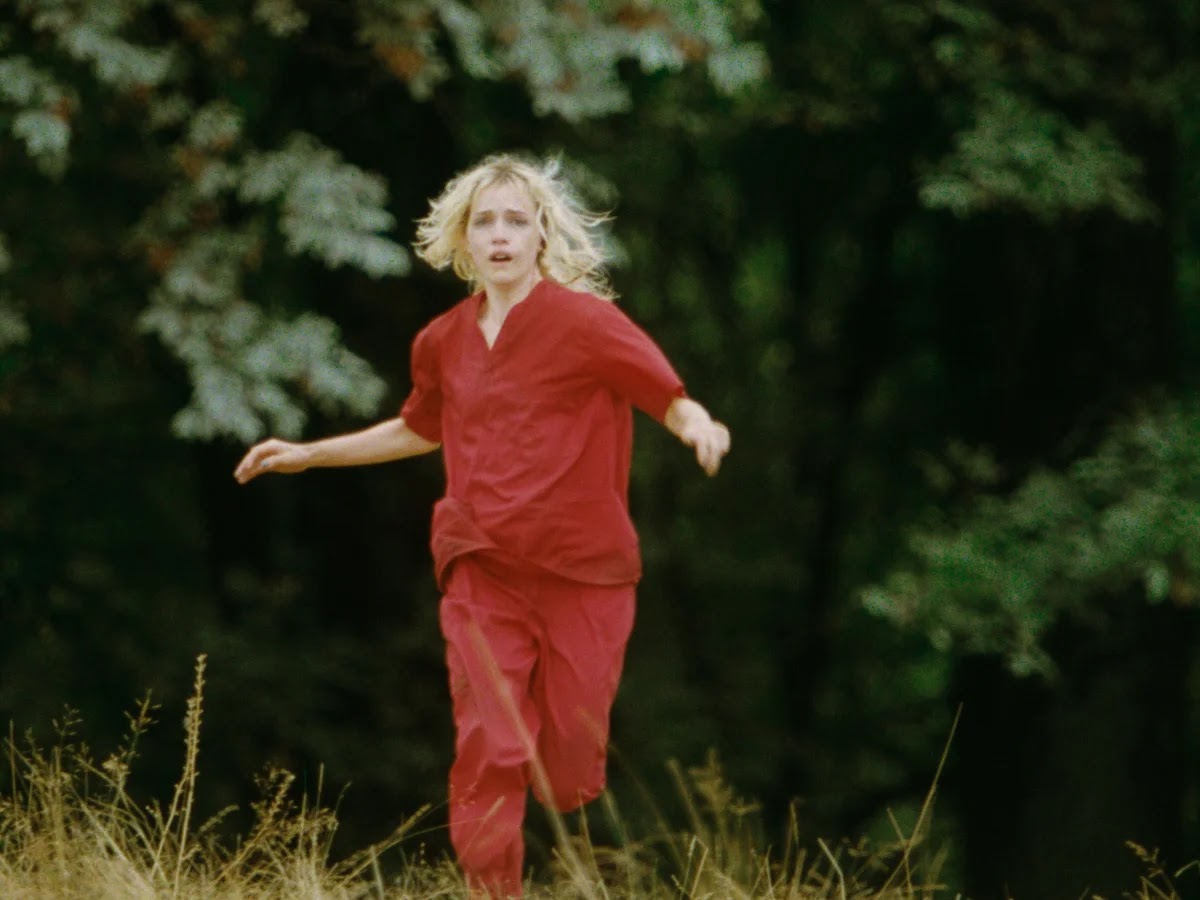
Rather, it was JT Mollner’s ‘Strange Darling’ that offered up the danger. Told in six chapters but out of order, which means we get sensory and action overload up front before setting in for long two-hander flirting – “Are you a serial killer?” And then the revelations… Willa Fitzgerald is exceptional with Kyle Gallner more than her match. The 35mm thriller colour scheme, the abrasive then seductive sound design, the dialogue, the hints of something retro, all go to make this smart, fun, funny, upsetting but ultimately a hugely entertaining thrill ride with a little something to say about gender roles. Even makes room for making breakfast being a highlight.
While ‘Strange Darling’ was strictly rollercoaster genre fare and therefore one step removed from reality, a film like Elric Kane’s ‘The Dead Thing’ offered up a more a nuanced inquiry into modern feminine identity. It’s true that many didn’t think this gelled and just bored, but from the languid pace I found an interesting ghost story about the modern malaise of urban hook-up culture. Blu Hunt gives an assured turn as a woman who turns to fleeting sexual encounters to alleviate her dislocation and depression, leading to lust-motivated hauntings. Putting all-encompassing desire at the forefront of motivation gives this its quirk and the atmosphere is of a dreamy urban ambience.
Emma Benestan’s ‘Animale’ had another fascinating female character: she’s a bull runner that isn’t butch or competing with the machismo, but just trying to be a part of what she sees and wants. It's the slow burn that draws you in with Oulaya Amamra’s soft-and-tough performance riveting from the start. The measured world-building allows the etching of the community and character to soak in. If it ends up being more obvious than promised, not realising that it need not be, it is nevertheless fascinating, exhibiting a sure hand and sense of place and culture in the Carmague region bull running context. And what to do with a bull running woman, eh men?
Michael
Sarnoski’s ‘A Quiet Place: Day One’,
‘Broken
Bird’ and ‘Magpie’
all
offered interesting female leads, if not quite wholly successful: the first
replacing action with the maudlin; the second having tonal problems until
reaching a decent Gothic finale; the last reaching only Get-‘em-girl!
cliches. And there was plenty of Final Girl Kick Ass action from the likes of ‘Azrael’ and ‘The Bitter Taste’ , but even better were the historical revenge
dramas ‘The Last Ashes’ and even Stone Age ‘Outof Darkness’ that
delivered more tricksy and thoughtful contemplations on female violence.
But it was ‘Furiosa: A Mad Max saga’ that delivered the full-throttle raw and thoughtful female-led drama, despite stretching across Furiosa’s coming-of-age. In fact, that this and ‘Mad Max: Fury Road’ both rage against toxic masculinity whilst delivering the very petrolhead action you came for are their exemplary achievements.
But
it was ‘Smile2’ that proved the surprise in its slippery structure, devotion
to failing reality and empathic examination of celebrity. Its smarts and nuance
meant it convinced me on the subject far more than ‘The Substance’: not
as delirious or delightful, but there was proper meat on the bone.
But
it was Pascal Plante’s ‘Red Rooms’
that felt truly dangerous. There are films where you feel you’ve gone deep in
the hole, where you feel you might have been where you shouldn’t, and this is
one of them. Juliette Gariépy’s performance became increasingly brilliant as
the plot unfolded. Compelling, morally murky/challenging, a brilliantly
structured thriller where what? and why? slides into WTF?!
without ever fully answering any of that, never being quite what you think.


