DAVID CAMERON: VAMPIRE HUNTER
A sharp-toothed slice of satire from Philip Challinor, The Curmudgeon.
Friday, 29 June 2012

Prometheus - a prequel, a sequel, a strange disappointment
PROMETHEUS
Ridley Scott, USA, 2012


Unleash the aliens. That’s all we ask.

Ridley Scott, USA, 2012

Notes before a film: indecipherable trailers & inappropriate audience members
It’s always a
good thing to wander into the cinema
after the adverts. It leaves your tarnished soul a little more complete if
you miss the commercials, leaving it all more ready to welcome in the film you
have paid to see. You still have the trailers, though. Incomprehensible trailers,
edited as if by a chef super-slicing and dicing, ones that show you everything
and nothing. What the fuck is happening? you
wonder. Explosions? More explosions? Action? Vehicular action? Was that some
kind of joke or punch-line? Who is that? Token romantic element? A bad guy?
Wasn’t this a show ... is this a remake of something? Wait, that look likes
something from that other one... What the fuck is happening x2?
For my trip to
see “Prometheus”, I didn’t miss the wretched Orange “joke” skit or the pitiful M&M
puff-piece (are these meant to contribute to our film-watching experience?),
but I did see the trailers for “Abraham Lincoln: Vampire Hunter” and “The
Amazing Spider-man”. Contemporary trailers do that thing of fading to black
every second, even before you’ve registered what you’re actually seeing, and
this is inevitably complimented by a big bass rumble like the sound of a small
cosmos, far far away, being tossed on its rear. If a trailer is not changing
every micro-second like someone simply fast-forwarding through the film you are
meant to be enticed to see, they are fading to back. “Boom!” – to black, it goes again and again, apparently to denote
tension and impending doom. I don’t know. Trailers don’t actually seem to want
you to detect any story or to decipher what you are watching. It’s just a
couple of seconds from here and a second or so from them, held together by
action shots and explosions. Signifiers of drama, humour, action, and so on;
just mostly signifiers rather than tantalising clues. It is trying to create
sensation as if that is all we need to be seduced. This punch means you will
get some violence thrills. This kiss means you will get some faux-sexual
tension. This scream into the camera is... well... this monster face is...
Abraham Lincoln
is fighting vampires with tedious 3-D enhancement, doing gravity-defying jumps
and spins in slow-motion, pointing guns at the screen, waving an axe around and
threatening some undead. Not sure there is any story at all but it looks to be,
in the action-fantasy canon, a bit like that terrible “Van Helsing” more than
anything else. I am sure that’s not what they intend. Wrong signifiers,
pointing at tedious overwrought elements and at previous bad films and genre
tropes. With nothing to entice other than action clips, why would I bother? The
novelty premise alone isn’t enough. What are they telling me with it?
“The AmazingSpiderman” trailer is odd [can't seem to find the extended trailer I'm about to describe]. Actions bits, fade-to-black booms; then the trailer stops to show an entire scene where Peter
Parker tries to get over his embarrassment to chat up a girl in the school
corridor. The scene goes on long enough to show that it’s awkwardly written and
fails to be cute by not rooting down the conversation and relying upon they’re not saying much and it’s cute that
they can’t actually agree to a date, but it just kind of implodes, really.
Then the trailer skips back to action shots; indeed, too many action shots. I
feel like I am seeing too much of what ought to hinted at, even if I am only
seeing micro-slices. A trailer ought to promise something tangible and the film
ought to deliver; trailer’s shouldn’t give away too much, but how they do, even
though they are showing only a second of something here and another there. And
you end up saying what? But not in a
good way.
Two favourite
trailers: “Europa” and “Blue Velvet”.
Anyway, there’s
also a trailer for “Ted” which features a fellatio joke, and I wonder if that
really is age-appropriate to go with “Prometheus”: I am wondering this because
I did not really note that “Prometheus” is rated “15”, and there are two boys
aged between 5-7 sitting with their dad a few rows down from me. Then the film
proper starts and I see that indeed it is a “15” certificate. Wow. What on
earth are these kids doing here and what the hell are they going to make of
Ridley Scott’s prequel to one of the greatest sci-fi horror monster films ever
made? Well, I’ll never know, but I would sure be curious to find out, and to
wonder why their dad brought them there (I heard them call him dad, so that’s
verified). Maybe they felt it was inferior to “Alien”.


An "Engineer" and Howard David Johnson's 1978 sketch "Promethues Unbound"
A sequel-prequel;
“Prometheus”
Well, what to
make of “Prometheus” anyhow?
My first inkling that all may not be overwhelming with "Prometheus" was when I was in the toilets at the local popcorn palace (to see "The Raid") and I overheard somebody, whilst peeing, saying that "it" was everything he hated about science-fiction. I thought, Surely he can't mean "Prometheus"? But there was, however, no other science-fiction to be seen.
It sure looks good, that’s for sure. Huge. Vast. Expensive, pretty, beautifully filmed and all that, as we have come to expect from Ridley Scott. It doesn’t lack for ambition. It starts slow and it has one of the oldest and one of my favourite premises: people go to a mystery place and the mystery place holds things untold, wonder, horror, etc. Let’s investigate! It might be a horror house; it might be the deepest depths of the Amazon; it might be a deserted town or an alien planet. What happened here? What is lurking in the shadows? What is that? Uh-oh! – and so on. “Alien” was fantastic at this.
“Prometheus”
follows almost step-to-step in the “Alien” plot, but then it’s an old and
reliable template and, as I say, one of my favourites. But what comes out of
the mystery is what really counts. What kinds of answers we get or don’t get is
what elevates and differentiates one story using the template from another. Perhaps
the problem and disappointment with “Prometheus” is that it is answering
questions that didn’t necessarily need answering: when the crew of the
“Nostromo” in the original “Alien” lands and discovers an extraterrestrial ship
full of strange extraterrestrial corpses and artefacts, and once we have seen
the eponymous alien in action, we can pretty much fill in the backstory
ourselves. Did we need to have that backstory filled in with a tale of faith
and the origins of man and some weak, vain clinging to crosses? That isn’t what
we were really thinking of needing answering in the original film: the original
was an exercise in being reminded that no matter how equally narcissistic,
brutal and advanced we are, we are still terrified that something else is
higher up on the food chain, just waiting to wipe us out. A quintessential
monster film enhanced by simply asking H.R. Giger to design the
extraterrestrial stuff. Boy, wasn’t that
a smart move? One of the greatest man-in-a-suit nightmares was thus launched
into popular culture. All vagina dentata,
mouth rape and things bursting out of your stomach – take that male viewers! The sequels expanded on the alien life-cycle and
broadened the premise, but really the simplicity of the original was beautiful
and almost primal: there’s a monster and it’s going to get you and chances are
that you can’t stop it. No need to know why. The sequel “Aliens” shifted gear
and became a highpoint of sci-fi action cinema, and action cinema itself; it
gave a little more about the alien, and more of them, plus an alien mother, but
that’s fine: mystery enough still surrounded them. By the time we get to the
“Alien vs Predator” fanboy series, we’re pretty far from the wonder of the
original, and the thrills of the immediate sequel.
That is to say,
the problem with “Prometheus” isn’t so much that it wants to fill in the
backstory, but that what it fills in isn’t actually that interesting, and it’s
not-interesting with pretensions. Perhaps we never needed these answers, but
then again why not take the series in
a different direction – “Prometheus”, after all, looks likely to be the start of a
new trilogy and Scott has decided to go for a more “2010: A Space Odyssey” and “Quatermass and the Pit”
approach, concerning the origins of man and the search for God and facing
death and so on. We know this because the characters don’t leave it to the visuals and
talk about all this. The characters are not particularly good, so this does the
film’s themes no good.
It also feels compromised. It says “caesarean”
when it means “abortion”. It has concrete-looking cylinders rather than the
icky, gooey, sex-organ-like alien eggs/pods of the original (although, ok, the
eggs surely come later and these are forerunners). It has Giger-lite murals. It
has mouth-rape and phallic-snake aliens that can break your arm – perhaps the
film’s best moment? – but the squid-foetus and the mini-Cthulhu vagina-dentata behemoth it eventually
turns into just can’t compare to those original man-in-suit Giger-designs.
Worse, this is
another case of an apparent group of specialists going on a special,
one-of-a-kind mission and acting: juvenile, incompetent, argumentative, unprofessional,
untrained, etc. Smoking in their space-suits; argumentatively splitting up from the rest of the group on an alien planet, for example. The black captain is too busy being nonchalant and sexually
available, as well as playing his accordion; so busy being inept on an alien
planet, in fact, that he doesn’t seem to be paying attention to evidence of a potential
threat, even though, you know, he is on a
space mission to find alien life. Is there no round-the-clock monitoring of
the nifty gadgets that are flying around the alien craft and mapping it out?
Why do they seem to get a briefing of the mission only once they have woken from a two year cryogenic sleep? Didn’t
they know what they were getting into? In the future, do apparent specialists
just leap into cryogenic sleep and hope for the best mission when they are
woken? And if the ‘robot’ is meant to not understand or experience many human
emotions, why does he keep smiling to himself with satisfaction and awe when
discovering the secrets of the alien race? Science-fiction always has a problem
with emotionless characters because, well, melodrama has a hard time accepting
the truly ‘other’ and letting it be itself. What’s the point of Charlize Theron
pulling her boardroom-career-bitch act? Where does that get them? And this all
hinges upon the protagonist’s crisis of faith and the fact that she lost her
dad? Hey, there’s no God and it’s pretty much meat and murder, although there
is the fascinating conflict of our inherent animal natures and our highly
developed technology (the spaceships look great) and confused emotional states.
She’s gone in search of God? Hell, “Star Trek” did that most weeks.
Unleash the aliens. That’s all we ask.
There’s eeriness
and dazzling sci-fi spectacle, but any answers are mundane, and I’ve a sneaky
feeling that they feel redundant; the characters are nonentities, the
squid-impregnation-abortion seems faintly distasteful and stupid and her
physical recovery and persistence afterwards unlikely. The revelation that the
aliens are some biological warfare (I think) is ok, but I preferred the idea
that they were simply a development of their own, travelling across space and
wiping out whomever they met far more resonant. That the alien “engineers”
simply turn out to be bad guys also feels dissatisfying. And when they are
woken, they get right back at continuing their mission, even though, well, was
this the only ship meant to be
targeting the Earth?
Not that Scott
ought to have simply thrown up another “monster house in space” scenario,
although that would have been fine, but “Prometheus” seems to be a victim of
its own mythos, forgetting the thrills and simplicity of its original premise
and relying too much on silly and uninteresting characterisation to carry the
weight of the drama. “The Thing” re-make/prequel was arguably narratively better
simply for being more modest in its intent. Well, “The Thing” is probably more
redundant that “Prometheus”, but no one expected much from “The Thing” and it
mostly delivered more than expected. “Prometheus” is a whole other weirdness
and clash of sequel redundancy and state-of-the-art cinema.

Awe-inspiring for
the eye; underwhelming in other details. It will likely attract those who love
to rush off and write essays on the religious symbolism and themes, which are
inevitably masquerade as profundity rather than the human narcissism
they are, throwing the far more interesting themes of survival and the expanse
and alienness of outer space. I don’t really feel inclined to be thoroughly dismissive or
unkind to “Prometheus”, but neither did I feel invigorated by it. A kind of
apathy is surely not the intended response, and there are those that seem to
loathe it, but it’s really just an expensively dressed average science-fiction thriller. So - Question:
one of the most disappointing and eagerly-awaited franchise entries in a long
time? Answer: probably.
Saturday, 23 June 2012
"Close Encounters of the Third Kind": the wonder of a man-child.
 CLOSE ENCOUNTERS OF THE THIRD KIND
I remember going caravan camping with my father
when I was 12 and finding inside, on a shelf, a book called “Alien Encounter” by Flanna Devin.
I remember most clearly deciding that it was about time that I started to read
adult book, to abandon the kid stuff and start seeing what big books dense with
prose were like. Also, I was besotted with the alien encounter idea. The cover
had a spaceship flying through the great void, but that had nothing to do with
the story within, a tale of an encounter that changes a small American town. It
was one of those books you would always find in the bargain bins, along with a
lot of crap horror, but which often bore great cover art. Anyhow,
extraterrestrials making creepy visits occupied much of the same fear-space in
my head as cemetery ghosts and attic monsters. I recall that UFOs were big in
the Seventies, and that carried over in my thoughts when I was an adolescent in
the eighties. Much of my sense of what alien visitations would be like was
rendered in “Close Encounters of the Third Kind”. It certainly felt like the
culmination of many anxieties and expectations of the UFO generation.
Having produced one of the greatest
suspense-horror-adventure films of all time in “Jaws”... well, let’s add “Duel”
in there and make it two ... Steven Spielberg turned his attention to science
fiction with “Close Encounters of the
Third Kind”. He imagined alien encounters as a series of dazzling light
shows and a touch of meeting the angels. For the most part, “Close Encounters” provides a wonderful
realisation of the UFO enthusiast’s dream, delivering a number of set-pieces
that reach a sense of the genuinely awe-inspiring. It’s uneven, but it’s pace is
deliberate, delivering encounters early but still holding back until the first
act transcends itself with the abduction of a small boy: his house seems to be
under siege by lights, bringing his toys alive, seemingly taking the house
apart by its screws to get to him. It is certainly one of greatest cinematic
alien abductions in cinema, effortlessly combining childish wonder and audience
terror. Indeed “wonder” itself seems to be the very subject matter and
certainly one of Spielberg’s abiding themes (and somewhat tediously too).
The curious thing about Close Encounters it
that its protagonist, Rob Neary, is one of those All-American All-Annoying
Man-Child characters, part clown, part asshole, selfish, tediously goofball,
and Dreyfuss also plays him like a Robin Williams knock-off. That is probably
not the intention, but Neary is a bad, self-centred and immature father from
the start when he can’t be bothered to stop tinkering with his train set to
help his eldest child with his homework. Spielberg says:
I
think in casting “Close Encounters”, what I was really looking for were actors
who were still closer to their own memories of their own childhoods. Richard
Dreyfuss was a bigger kid than the children he was raising in his suburban
house.
Spielberg is probably thinking that a child’s-eye is the eye of wonder, which probably makes
him the perfect Hollywood wunderkind, but the net effect is imagining American
Suburban families as immature and easily distracted by shiny objects. This just
does not cohere with the moment where all the scientists and specialists and
whomever, when faced with the mothership, simply stop what they are doing,
barely remember to do their jobs and simply stand in true awe, and the audience
does much the same: what we are doing is connecting with our adult sense of wonder. That is: we are not being infantalised;
awe is not solely the domain of the child. When anointed with the vision of
Devil’s Tower, Neary-Dreyfuss – the kind of whacky guy who drives against the traffic with maps
in front of the windscreen, because, you know, he's obsessed! – character flaws go
into overdrive, reaching its nadir in the embarrassing comedy sequence where he
starts throwing plants and bricks through his kitchen window and fighting the
trashman for trash bins. He drives his family away and has no attachment to
them to make him think twice about, in the end, joining the aliens.
He’s lost his job, alienated his wife, and
spooked his kids, yet he can’t bring himself to care about any of it – not
since the universe slipped in through the car window. [1]
says Eric Hynes.
But actually he is a one-note character that just gets worse. Since he starts
out with little interest in paying attention to family matters and, it seems,
adult concerns, the summons and pilgrimage to the mothership looks like a
calling for all emotionally stunted adults, especially the man-child characters
that dominate the American mainstream and sit-coms, to leave those
responsibilities aside and join child-like aliens to head to the stars. The
adults are left behind to clean up the mess and go back to work. However, Neary’s
cracking-up does provide one splendid moment of domestic breakdown which feels
quintessentially Spielberg, a scene that momentarily matches all the special
effects around it: Neary is at the dinner table making his mashed/creamed
potato into the likeness of “Devil’s Tower” and the family just look back of
him and start crying with a kind of abstract despair and a realisation, surely, that
he has deserted them in some way. It is the one moment of true emotional effect
before Neary’s behaviour becomes a dumping ground for slapstick and man-child
narcissism.
The Special Edition of “Close Encounters” – one
of at least three varying versions –provides the film with one of those
Spielberg sentimental touches that ruins almost all his films, making them one
half brilliant and one half ridiculous. In this revised edition, Dreyfus walks
into the spaceship and both the light show and orchestra goes into overdrive.
Spielberg later realised that we should never really see inside the ship, as
that ought to be all up to the audience imagination: something eerie still
remains by not seeing, not only promises of unknowable wonder. But worse, as
John Williams whips his string section into ecstasy, he also drops in a motif
from “When You Wish Upon a Star.” Indeed, the way to imagine a fantastic and
benign alien contact is to throw in a tribute to Disney. Such crassness breaks
the spell.
But let’s leave the Special Edition aside.

The final thirty minutes is a fantastic
prolonged set-piece of wonder and revelation on top of more wonder and
light-shows. It is quite a feat, leaving narrative to one side to show what the
visual medium can do. The other remarkable achievement of Spielberg’s film is in “producing a seventies-set drama so devoid of
cynicism.” [2]
Indeed. However unrealistically the scenario may play out, it probably is a
splendid indulgence to see an alien encounter rendered so benignly without the
military rushing in to shoot up anything vaguely un-American; or, indeed, to rush
forward and immediately throw the people who come out of the mothership into
horrifying decontamination process and post-abduction tests (or maybe they do,
but in the film’s world it seems unlikely). Considering that a key part of the
authorities cover-up strategy is to use ideas such as contaminated air, the
ignoring of the possibility of alien viruses is somewhat disingenuous, (indeed, what should we make of the toddler
that was abducted simply being taken out from under the noses of the scientists
to simply pop back home?).
But no matter: the "Close Encounters" opening visions are unnerving and thrilling
and the prolonged finale is jaw-dropping, so side-stepping concerns about
aggressive aliens and the fall-out from the encounter is part of the delight of
this encounter. And, seemingly despite itself, its sense of wonder is not really so juvenile. It's looking upwards and being amazed and scared and back again, and that is not totally the domain of the child.
[1] http://www.reverseshot.com/article/close_encounters_third_kind
[2] http://www.reverseshot.com/article/close_encounters_third_kind
Nightmares of "This Island Earth"

"This Island Earth"
Joseph M Newman, 1955, USA
One of my fondest film-watching memories is when I was about eleven and living at my
grandparent’s house after my parents split and getting to watch the b-movie
season playing over months and months on television. I was about eleven or
twelve and I loved getting into my pyjamas and watching these films on a Sunday
evening before bed. I saw so many of the black-and-white creature features this
way; my private education to the drive-in horror and science-fiction era, as if
I had been born decades earlier. I know for sure that I saw “The Beast from
50,000 Fathoms” and “King Kong” and “It Came From Outer Space” that way, as
well as “It! The Terror Beyond Space”, “Earth versus the Flying Saucers” and
“This Island Earth”.
“This Island Earth” is kind of an honorary classic: it’s not a classic
due to story and execution, but the whole is definitely greater than the parts.
It looks and sounds like a tacky Fifties sci-fi, but it is much more if you
play into it. It has decent and decidedly adult characters; it has a nice air
of menace and mystery and a fascinatingly ambiguous relationship with its
aliens. The aliens are the kind you are likely to meet in “Star Trek” –
intelligent and humanoid with over-sized foreheads, but can seemingly pass for
human. They are a threat in that they are a civilisation – from Metaluna – on the brink of being wiped out by their
enemies and both need Earth’s help and intend on moving their population to
Earth too. The film’s classic status is surely down to the fact that it is
quintessential Fifties-era pulp sci-fi, and that’s a lot of fun and no bad thing.
It also has a slow build-up that is rewarded with a fantastic if brief visit to
Metaluna itself, a gorgeous cosmic vision with comic-book colours and mutants,
one which rivals anything from “Forbidden Planet”.

“This Island Earth” is full of green rays, flying saucers, manipulative
but super-smart aliens, unlikely square-jawed scientists (Rex Reason) and
equally unlikely science. It looks and acts like something out of “Astounding Science Fiction”
magazine,
and that is no bad thing. The worries about other cultures being smarter, manipulative
and colonialist, but trusts its square-jaws and female vulnerability to get an
Earthman through an extraterrestrial encounter. It is dated, but that doesn’t
seem to do it any harm. It gets better and balmier as it goes on and has the
good sense to throw in some alien mutants too to spice up things.
 Yes: the mutants. These insectoid aliens gave me a nightmare that I
never quite forgot. They were lumbering, soundless and – well, you can’t get
much more alien than insects. I dreamt that I was on the spaceship standing inside
the giant transparent tubes it had to condition people to different
environments; my dream was paraphrasing the spaceship and a scene from the film.
One of the mutants was going crazy on the flight deck, just as in the film, and
I was stuck in the tube. The difference was that there was a gap at the bottom
of the tubes so that feet, ankles and lower shins were horrible exposed. The
alien came attacking the tubes and I was trapped inside and, eventually, it started
to attack my feet at the gap at the base of the tube. I suspect I woke up
during the attack. Oh yes, it was quite a nightmare and I’ve never forgotten
it. For this reason, I have quite a soft spot for “This Island Earth”.

It remains a delightful slice of pulp hokum with an odd charm all its
own. It doesn’t have the resonance and deep chills of, say, “Invasion of the
Body-Snatchers”, but it is old school fun and possessed of enough intelligence
and gorgeous alien scenery to more than hold its own.
Wednesday, 9 May 2012
Thursday, 3 May 2012
The Cabin in the Woods

Drew Goddard, USA, 2012
The CABIN IN THE WOODS
(This review is completely full of spoilers)
Count me in the minority of dissenters. When I read a little about ‘Cabin in the Woods’ I was told that it
would not be what I expected, so I stopped reading, thinking there would be
cool twists and surprises. Well, any horror and science-fiction aficionado can
hazard a guess where it’s going from the first five or ten minutes, so there
are no twists or real surprises, just a pop-culture frown at horror and a bit
of showboating.
As a supposed meta-horror about the genre, ‘Cabin in the Woods’ really isn’t very
smart, and therein lays its offensiveness. Perhaps its hypocrisy starts with
our first view of our main protagonist in her underwear. Drew Goddard’s camera maintains
a sleazy eye in order to both capture the sexuality of our tediously hot young
cast – except for the stoner token, of course – and to titillate the easily
titillated in the audience: it seems confused where the line between those two
poles are. Later, our “puppeteers” will urge on one of the characters to show
her breasts, apparently to appease both them and the greater forces they are trying
to appease, who apparently – apparently like the rest of us – want to see her
goodies. In the reality of the film, this greater force is meant to be The Old
Gods. Perhaps it is this that truly defines the film’s deep-rooted silliness. There’s
a cabin in the woods which is a stunning bit of science-fiction-cum-supernatural
construct where a super-secret government organisation has to send young
Americans (and others from all over the world, it seems) so that they can
unwittingly choose from a selection of horror scenarios and die by that choice.
This is done to appease Old Gods, whom apparently want a reality TV horror show
and who will otherwise destroy the world. Old Gods? Really? To my mind, it is
only HP Lovecraft that can pull off The Old Gods scenario. Of course, the Old
Gods are an allegory for the horror audiences’ appetites for blood, human
sacrifice and, apparently, titties and derivative genre fare: it is to this
that we must sacrifice young hot things to nasty horror genre deaths.
“You think you know the story,” challenges the
tagline. Well, any alert sci-fi or horror will work it out early. The problem
is that fanboy favourite Joss Whedon (scripting) and Drew Goddard (directing
and co-scripting) are writing about, and perhaps unintentionally for, a
perceived lowest common denominator horror fan and failing to capture the
complex and sophisticated relationship that horror fans often have with the
genre, one which they are able to engage with various levels of self-awareness.
Worse, the scenarios meant to sate the Old Gods seem to be based upon a post-‘Scream’ American horror template, the
kind where posters and covers for horrors simply have a line-up of young
interchangeable, bland hotties. It is hard to take it as fun and perceptive, or
seriously, when the breadth of its knowledge and feeling of the genre seems to
be based upon television horror, franchise sequels and a story by HP Lovecraft
it once heard about. So we get characters proposed somewhat un-ironically as
‘the virgin’, ‘the whore’, ‘the athlete’, etc. Anything ironic or tongue-in-cheek
about this dissipates when the most sexually active of the victims truly is
considered ‘a whore’, and the idea that, despite a little tweak here and there,
young people really do like to fall into and act out their stereotypes. Adam
Naman writes at Reverseshot:
In Drew Goddard’s new and extravagantly lauded Cabin
in the Woods, a group of sharp, likeable protagonists are forcibly reduced
to generic stereotypes within the film’s storyline to prove some larger point
about pandering to audience expectations.
But that’s not exactly so: the characters start out as annoying types
and then are reduced to cliches. Okay, so the ‘jock’ is also a successful
academic, and for the most part it is “the puppeteers” trying to shoehorn their
characters into stereotypes too, but our young victims really aren’t made that
complicated; they are still as initially brattish as any other tediously
teen-horror. And then, there is the fact that the sexually active woman (who is
capable of giving tongue-sex to a mounted wolf-head) really is considered a “whore”
in the apparent scheme of things, and the film does not seem to realise how
offensive this may be and how it is playing into awful and ancient patriarchal
prejudices and stereotypes. After all, it’s otherwise not clear why the
“virgin” – which she isn’t – doesn’t qualify for “whore” status too. Is it
because she’s less “slutty”?
There is the whiff of contempt for the audience
about all this: despite the amusing asides to Asian Horror - which is ‘Cabin in the Woods’ best gag - and ‘The Shining’ and – most embarrassingly –
‘Hellraiser’, ‘Cabin in the Woods’ presents the most formulaic and worst of the
American slashers as the go-to sub-genre to epitomise horror, and casts its
“puppeteers” as slightly-bumbling and frequently obnoxious bunch who gamble on
the lives of their victims, egg on the girl to take off her top just before she
is murdered and treat all of this as a game. Oh, they protest that the gambling
is just letting off steam, that it is a hard job etc, which is meant to explain
their obnoxiousness, but that’s just waffle. Having a Token Black Character of
Conscience doesn’t help either. Perhaps making horror films under Dimension
Films and the Weinsteins – who always actively demand their quota of tits –
creates the feeling that American horror film makers are just stupid
manipulators playing to the Old Gods of the lowest common denominator, but it
is presenting a woefully reductive vision of the genre, if not the studio
process, and no amount of name-checking other work will elevate this true meta-horror.
It maybe satirising the commercial end of horror, but it’s not quite doing
anyone any favours either. A larger point being made? Well, It’s all
bread-and-circuses is not an especially revelatory footnote. Like Michael Haneke’s
‘Funny Games’, ‘Cabin in the Woods’ represents horror and condemns its
practitioners and product without understanding that they might understand what
they are watching. The Weinsteins’ own ‘Scream’
revealed how horror satire can be both serious, respectful, nodding and amusing
(although according to Peter Biskind’s book ‘Down
and Dirty Picture’, they didn’t understand it one jot and almost tried to
sabotage Wes Craven’s production at first). “Cabin in the Woods” references “The
Shining” and “Hellraiser” without
seemingly realising that those benchmark films were already deconstructing,
reconstructing and setting horror precedents. A fan can look to a film like Norway's 'Fritt Vilt' to show how the genre can still provide solid genre characters and mayhem without resorting to apathy or crassness.
It is hard to truly treat ‘Cabin in the Woods’ as fun or think it has true respect for the
audience when it wheels out the Sigourney Weaver of Exposition at the end to
tell us what we already know. And is it even worth mentioning how stupid the
big-red-button-that-unleashes-alll-the-beasties
is? Maybe TV horror can get away with such shorthand, barely, but in true
cinema, greatness is in the details and credibility. When you have to start
making major allowances for such flaws, there is the hint that all may not as
be as good as it looks. And to be tutted at by Whedon who gave soft horror one
its most famous fan-boy, pop-culture wet dreams: a hot girl who fights
vampires? One must look to films such as ‘Martyrs’
and ‘Let The Right One In’ and ‘Attack the Block’ to witness true
engagement and dialogue with the horror genre. Or perhaps ‘The Monster Squad’ and anything by Joe Dante are better suggestions
if you’re looking for the knowing but softer satirical stuff. Whedon has
provided much better fun. Where is the love in ‘Cabin in the Woods’? Raiding the horror cabinet and tutting a bit
isn’t good enough. ‘Cabin in the Woods’
is meta-horror for ‘Scooby-Doo’ fans.
Surely the Old Gods themselves require better feeding than this?

Wednesday, 21 March 2012
The BBFC and "Eraserhead"
Question: Is the BBFC a condescending entity?
Exhibit A:
BBFC Eraserhead report - 15th July 1979
Bonus question: Is there any evidence of sexism in the BBFC opinions?*
Report summary:
"Well, it's certainly different and well enough made to merit some consideration. Fortunately the only criterion for this report is category and we all settled for the 'X' chiefly because of the truly obnoxious foetus. 14- and15-year old girls ought to be spared that, indeed all pregnant women should be advised of the film's content."

* Please note I used the term 'opinions' rather than, say 'conclusions' or 'verdict'.
Exhibit A:
BBFC Eraserhead report - 15th July 1979
Bonus question: Is there any evidence of sexism in the BBFC opinions?*
Report summary:
"Well, it's certainly different and well enough made to merit some consideration. Fortunately the only criterion for this report is category and we all settled for the 'X' chiefly because of the truly obnoxious foetus. 14- and15-year old girls ought to be spared that, indeed all pregnant women should be advised of the film's content."
* Please note I used the term 'opinions' rather than, say 'conclusions' or 'verdict'.
Sunday, 11 March 2012
Video and Violence: a vendor's tale
The following piece is taken from a work in progress, my pending book "The Gory Id: Killers in Film", and features as a foreward to a chapter discussing "Henry: portrait of a serial killer". I was lucky enough to find a journal entry written around 1992, when I worked in a video store, in which I documented a minor arugument I had had with a customer over the film and whether it was violent or not.
__
__
 Video and Violence:
a vender’s tale
During the 1990s, I was
fortunate to work in what used to be called a “video store”, a phenomenon to be
fondly remembered that came and burnt out over about a twenty-year period, more-or-less.
Or rather, I worked in a newsagent where one corner opposite the greeting cards
and chocolates was devoted to a wall of VHS covers. When VHS came, the impact
on film watching was incredible: it is simply impossible to convey to any
youngster what it meant when video tapes were invented and, after a while,
became widely available affordable to any old household. Or the fact that you
could rent videos overnight from your local store: amazing! Before the VHS
revolution, if you had loved a film seen at the cinema, you would wait a year
or more before it turned up on television; and if you wanted to see it a third
time, you would have to wait another year for the repeat, of you were lucky,
not forgetting that you would have to make sure you were actually home to catch
it. I myself had many nights when I was meant to be asleep for school illicitly
watching films and television with my face pressed against the black-and-white
screen in my bedroom with the volume as low as possible so that I wouldn’t get
caught. Film-watching required a patience and dedication that would seem
intolerable in the digital age. And then there was the Video Nasty period,
which made VHS dangerous too (David Cronenberg knew!). And then people were
recording favourite films and television shows, and so sometimes you had to
make sophisticated arrangements and networks of friends of friends to acquire
that one that you missed on TV last week. And I have very fond memories –
during the nineteen-nineties – of heading across town to the local film fair in
order to buy the films banned by the BBFC: oh yes, I was very excited to have ‘A Texas Chainsaw Massacre’ (1974), even
in its second or third-generation quality. ‘Salò,
or the 120 Days of Sodom’ (1975)? ‘Cannibal
Holocaust’ (1980)? ‘Evil Dead’ (1980)?
Yep, those too and all the joys of acquiring forbidden fruit.
I
recall that the very first VHS tapes in my collection were ‘An American Werewolf in London’ (1981), ‘The Amityville Horror’ (1979) and ‘Eraserhead’ (1976). I was still in my
mid-teens when I got these and since they were all 18 certificates, I have no proper
recollection of how I got them, although I do recall waving ‘Eraserhead’ at my mother to buy for me.
That was a film that had stunned me upon stumbling upon a late night broadcast
when I was thirteen, and to think I was to actually own it was mind-blowing. Video renting was also a delightful
ritual: my local newsagent was also a video store and even though I did not
know that I was to eventually end up working there in my twenties, in my late
teens it was a treasure trove. Any horror fan of the era will tell you about
the joys of browsing those big boxes with the outrageous and nasty covers. You
were going to end up with the cut versions, probably, but those covers
triggered the lurid and fevered imaginations of millions of young horror fans,
creating imaginary horror films that were hardly ever to be matched by the
actual film on the chunky cassette.
And
then, with the advent of video cameras being made affordable and available to
the general public, we started to make our own films too. But more on that
later.
So
I came to work at this video palace, and I grew to know its particular
selection of hundreds of films intimately. There was the excitement of the days
when my boss would bring back new titles from the supplier, or those that were
delivered. What new films would I get to see? And then there was the
disappointment of those he hadn’t ordered that I wanted to see. It was amazing,
for example, when he brought back ‘Henry:
portrait of a serial killer’ (1986), which I had seen in one of its rare,
rare cinematic screenings at the Everyman Cinema, when it had quite traumatised
me. And then I rented it out. There were times I would take home a film every
night, from junk horror to Hollywood Top Titles. Then other people rented it
out, much to my amusement, for I was certain that for the most part that it was
not what they expected.
One
day, a man slapped the cassette of ‘Henry’
on the counter, returning it, and he said, “It’s supposed to be violent, but
I’ve seen more violent ‘15’s.” So I asked him, with quite some tactlessness:
didn’t he find seeing a kid’s head being whacked against the floor and having
its neck twisted violent? He sniffed the answer away. I wondered if he would
feel different if someone broke into his house and murdered his kids (he had
three). He still wasn’t convinced. He had obviously watched ‘Henry’ for the violence and had been
disappointed. Perhaps the BBFC’s cut had been successful in taking out all the
extremities after all? Perhaps his view of screen violence was different to
mine? Oh, I am sure.
But
more than that: that very day, two ten year-old boys from Merseyside had been
in court for murdering a two-year old boy the week before. Their names were Jon
Venables and Robert Thompson. This was the famous Jamie Bulger Case and the
media and the entirety of British society was consumed with it. When the police
tried to smuggle the two boys out of court, the crowd of adults outside
attacked the vans, throwing bricks, threats and expletives after the van and
the kids (and the police?). Soon, the prosecution in the case and the media
would claim that a typical little b-movie horror called ‘Child’s Play 3’ (1991) was inspiration for the boys to kill,
bringing about a second wave of “Video Nasty” hysteria. The after-effects of
the first “Video Nasty” wave still had not passed, and wouldn’t until the
invention and whirlwind effect of DVD. Indeed, ‘Henry’ itself had been in certificate and censorship limbo for
around eight years before I got to see it, uncut, at the Everyman Cinema. But
with the Bulger Case consuming all, violence and children and parenting and
screen violence was very much enflaming the majority of media and national
conversation. Quentin Tarantino’s debut ‘Reservoir
Dogs’ (1992), for example, was a cause célèbre for the pro-censorship and anti-screen violence voices and kept the
topic at the forefront of media outrages (although all Tarantino had actually
done was leave in all the blood that film
noir had previously had to keep out).


And
within this climate where sensitivity to screen violence was high, this man
that I was debating with, having rented and dismissed ‘Henry’, asked me if I had been to the Gallarea yet: The Gallarea
being one of the brand new shiny multiplex cinemas that were suddenly popping
up and sweeping the country, killing off all the local and small cinemas in
their wake. I said that I hadn’t been to The Gallarea – yet – because it wasn’t
really showing the films I liked, and I tended to go to The Everyman in
Hampstead instead. To which the customer pushed up the tip of his nose and he
said, “Snob!” Evidently we were never going to agree on representations of
violence on screen.
Myself,
I was becoming increasingly interested in the subject of screen violence and its
relationship to society around that time. I was convinced that verisimilitude
in screen violence was crucial to a moral representation: the more realistic
and graphic, the more honest and truthful. I had foolishly been turned off by
the hysterical super-violence of ‘Total
Recall’ (1990), for example (later I would come back to it, wiser, less pious,
and relish its absurdity and outrageousness), even though it was a film I
should have otherwise lapped up for its outrageousness (which I did later). I,
you see, was busy watching shockers such as ‘Henry’ and ‘Man Bites Dog’
and the ridiculous and stupid violence of contemporary action films did not
convince me. I felt that they were trivialising a very serious subject. This,
after all, was the glory days of super-violent actioners in the style of Schwarzenegger,
Van Damme and ‘Rambo’ hits. Their
lack of realism and awareness was an insult, I felt as I missed the greater
complexities and representations of screen violence.
And
so it was indeed the verisimilitude of John McNaughton’s ‘Henry’ that met my criteria of the time. And this, indeed, was to
me real horror and real violence on video. And that was before the character of
Henry himself video-taped his killing.
(To be continued in "The Gory Id: Killers in Film")
Tuesday, 24 January 2012
"The Exorcist"... or "the sexorcist" conversation.
 On
a train home after a night out, my good friend Screaming Joe Sangre and I ended
up discussing “The Exorcist”. We talked about how cool Max von Sydow is and how people sometimes missed all the Dick Smith aging make-up he wore; how the Catholic Church endorsed the film, how the foley work and atmospherics were fantastic and how it was far more horror exploitation than some would credit it.
The next morning, Joe texted me, thinking how “The Exorcist” might be: sexist or ‘sexorcist’ in its attitude or play on fear towards female sexuality, female adolescence, etc. (the masturbating and how immoral it is, especially with what she uses [the crucifix]). I would have seen it as more of a criticism on the church’s attitude rather than all the acclaim it’s gotten from the church.
To
which I answered: It is sexist
because it’s earnest and buys into Catholicism, and all earnest religion is
horribly sexist. “The Exorcist” is all about The Men fighting Evil over the
body of an adolescent virgin. It treats puberty as a literal demonic
possession: early sexual awareness and experimentation (masturbation) is
represented as a total (blasphemous) abomination. See also: bodily discharges
represented as disgusting pea green soup-vomit. Once the priests have martyred
themselves during exorcism, the girl returns to a pure, virginal state with no
memory of events (what, no vaginal damage)? What she’s being purged of is dirty
language and early sexuality – i.e., female maturity and independence.
I
never saw “The Exorcist” as critical of Catholicism, and certainly what I have
read around it seems to imply that Freidkin (director) and Blatty (writer of
original novel) both buy into it seriously. The Vatican has endorsed this film,
which shows that (a) religion has a taste for horror, which is no surprise, and (b) they probably
wouldn’t know how to see the film as a black comedy too. It is a fantastic
horror, indeed, but I buy into its premise as much as I do “The Omen”. I do
reserve the right to change my mind upon a fourth or fifth viewing of “The Exorcist”
in regard to its earnestness (my memory does not store any impression of the film
being critical or) and as far as relgious horrors go (I don’t buy into them), “The
Exorcist” is probably the best, which is ironically the result of the very
earnestness that I likely distrust.
And
then I told Joe that he really has to see “Martyrs”.
Wednesday, 11 January 2012
Buck Theorem's "The Third Monster and other oddities"
“This compilation contains 20 tales of mystery, horror, fantasies, monsters, nightmares and dreams. Ghosts both vengeful and sorrowful. Vampires of autumn and cinemas. Murderers who are terrible, horribly young, and occasionally bizarre. Strange big cats stalking dreams and suburbia. Living dolls hunting victims. Schools haunted by bullies. Desert castles and the living dead. Unusual holiday resorts and graves with relentless appetites. In the realms of the uncanny, you shall find all the oddities you could care for.”
THE THIRD MONSTER AND OTHER ODDITIES
Here is my second book of fiction. This one is one of those collections of horror and mystery and, I admit it, abit of whimsy, the origins of which lies in a couple of horror anthologies that I wrote when was between, perhaps, ten and eleven. I have always remembered a few of the stories that I wrote as a child for those collections and those stories appear in “The Third Monster and other oddities”, as well as a bunch of others that come from my youth, dreams and up to the zombie fads of the Twenty-First century. My affection for horror and the bizarre is life-long and shows no sign of going anywhere yet.
The joys of self-publishing haven’t lost their novelty as yet, so I hope you would enjoy this bit of nonsense, should you buy it from Lulu.


Friday, 23 December 2011
2011 - Best films seen and general notes

Here is a list of the best films that I saw over 2011:
ATTACK THE BLOCK (2011)
13ASSASSINS - more below
UNCLE BOONMEE WHO CAL RECALL HIS PAST LIVES (2010)
– glorious oddness. This is how magic-realism should be.
DRIVE (2011)
I SAW THE DEVIL
- Nasty and compelling serial killer/revenge flick that quite takes to task the vengeance motivation of most action narratives. Both gimmicky and deeply troubling.
DEEP END
- Fantastic 60s coming-of-age story with a wonderful swimming pool backdrop. Made me think of how few films there are about the experience of getting your first job.
A ROOM AND A HALF
- Visually stunning and sumptuous, stuffed full of detail and fancies and even a fantastic animated sequence. The sequence where pictures in a food book come to life is one of the most dazzling and sumptuous visuals I have seen in ages.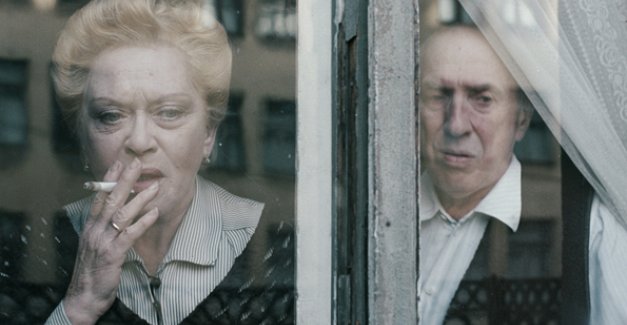
TINKER TAILOR SAILOR SPY (2011)
– stunning plot and made as if for adults! Tomas Alfredson is definitely a name I shall get excited about whenever it turns up.
STILL WALKING (2008)
– instantaneously one of my favourite domestic dramas crackling with unresolved tensions and the things that make families tender and shocking all at the same time.
THE PAGE TURNER (2006)
– icy French revenge domestic drama. Cruel and wonderfully performed.
And honourable mentions...
THE BURNING (1981) – a consummate 80s slasher. The lingers in the memory as a far better film that it probably is, but then again: the raft scene.
BLACK DEATH (2010) – an unsual horror which end up being a pitch-black character and social study.
MONSTERS (2010) – don’t let the title misguide your expectations. As a low-budget invented-from-nothing exercise, and as a portrayal of how people might live at the edges of a world taken over by a science-fiction premise, this was quietly stunning and original. Also perhaps the best romance I've seen in a film for a long, long time.
GORGO (1951) – the final act with Gorgo stomping all over London is fantastic and the match for any albeit more realistic contemporary effects sequences.

Yes, I know what I just said about the effects, but the destruction caused by Gorgo is very, very impressive, I assure. It's just that his model head isn't quite as great.
INTERPLANETARY (2008) – winning and funny low-budget sci-fi filler in the style of “Dark Star”
THE KILL LIST (2011) – oh, it definitely gets under your skin. Stay with it. Probably an instant classic.
SALVAGE (2009)
SEIGE OF THE DEAD (2010)
– because I like films that are about realistic people dealing realistically with impossible horror situations.
THE SAILOR WHO FELL FROM THE SEA (1976) – which is just very odd in and particularly English way. Probably misguided as a Mishima adaptation, but something about this kind of ‘60s British cinema remains quite uncanny and bizarre. They just don't make beguiling bafflements like this anymore.

The two films that I saw at the cinema that truly surprised me and blew me away this year were “Attack the Block” and “13 Assassins”.
Oh yes, I know that “TREE OF LIFE” (2011) is meant to be THE one, but it was broadcasting its own greatness so loudly that I just nodded and went on to others that genuinely surprised. I did not feel that the entirety of cinema had been reinvented just because Terence Malick had created a gorgeous stream-of-consciousness cinematic family album with some science-fiction pages thrown in for good measure. I thought the birth of the universe sequence was ravishing. I thought the family drama that takes up the centre of film was far more linear than I was given to expect, that it was pretty and as stirring as a fine piece of prose. I felt, as I was always bound to, that the religious symbolism was daft and stunted. Like all great art that gestures wildly at that very greatness, threatening narcissism, it seemed to think religious iconography was incisive and enlightening instead of obvious and narratively trite. This was not really an investigation into the faith of its characters for it was far too obtuse and, shall we say, airy-fairy for that. It is exactly the kind of film that critics can love because it allows them to wallow in the sound of their own voice (yes, yes, me too). It’s characters, aside from its Brad Pitt dad and the Malickesque son, were woefully two dimensional. People seem to go on about the mother’s “grace” as if that is all she needed: gestures and reductive symbolism over genuine characterisation. The third act also had the sound of collapsing in upon itself and leaving the audience behind as it turned deeper into naval-picking. On the other hand, as a cinematic evocation of memory in action, “Tree of Life” was a wonderful indulgence.
I was equally impressed with Gasper Noe’s “Enter The Void” (2009), which I was fortunate enough to see in the same week as Malick’s film and which I felt to be the evil twin of “Tree of Life”. That is, it was a film that relied upon a slender narrative to explore, with highly stylised and stunning visual conceit, its mostly abstract characters. Both films were extremely dreamy, indulgent, pleasurably overlong and frequently breathtaking. “Enter the Void” also offered a knock-out opening credits and first act. “How did they do that?” frequently came to mind.

Lars Von Trier’s “Melancholia” (2011) also offered a flip side to “Tree of Life”, as well as a stunning opening sequence that matched Malick for beauty and stylisation. Trier is a deeply compelling and divisive director and can really excel and transcend as few others can. His “Europa” remains one of my favourite and one of the most visually daring films I have ever seen. Around the time of “Breaking the Waves” and “Dancer in the Dark” – the latter which I really like, not least for Bjork’s overall contribution – he decided to use female emotional and mental instability to convey his own depression and, yes, melancholia. I am adverse to the somewhat misogynist conflation of female emotional and mental instability and especially that they are also transcendent in some manner. Von Trier is ordinarily saved by some excellent performances, and “Melancholia” hosts a number of great character turns, no matter how silly some of it may be. Its sense of narrative timing is timing – try to put the melancholic Kirsten Dunst’s disintegration on her wedding day on some kind of clock and see whether it seems possible – and if you do not take to the film, you can shove a planet through its weaknesses. But its weaknesses feel more like punk, just as Malick’s feel like classical. However, the cosmic symbolism and frequent beauty and the sheer audaciousness of the ending (not to mention ambiguity: futility or final understanding) makes this a fascinating watch.
Again, “Black Swan” (2010) was problematic for me for seemingly presenting psychological ill health with transcendence. Of course, it was a slummy giallo horror in a tutu and since people tend to prefer their horror in fancy garb and their female performances in meltdown, not to mention some obvious symbolism, it generally went down well and crossed over into the mainstream. I shall probably enjoy more it a second time around when its pretentions and craziness can be laughed at and enjoyed just like any other b-film.

Similarly, I always want to enjoy Pedro Almodovar films more than I evidently do. Something about the way he makes rape and murder as casual as his excellent female leads put on another dress or make lunch feels too divorced from reality to work for me. A kind of camp regard for all things taboo, but not quite with the same revelatory or satirical rewards as in the work of John Waters. Nevertheless, “The Skin I Live In” (2011) was a far more successful body-horror and ‘mad doctor/scientist’ film that Tom Six’s flat joke “The Human Centipede”. “The Skin I Live In” was a kind of camp Cronenberg-lite, but that is not a bad thing. The consequences of mental and emotional suffering were all over Almodovar’s tale of gender and trauma. It still did not possess the same stunning narrative pyrotechnics and rigorous plotting as “Bad Education”, but it was a fine b-movie horror that, despite its crass elements, was likely to provoke at least cursory thoughts about sexuality and how it defines us.
“Tyrannosaur” (2011) was quite the horror film in its British miserablism. Although well acted and filmed, it seemed to wallow without insight. It did possess a stunning performance by Olivia Colman, though.
I suppose “Hugo” (2011) appeared on a number of end of year top 10s because, well, film fans seem to enjoy films that trumpet how great film it. Or magical. I don’t really trust that Disneyesque or Speilbergian co-opting of that term “magical” because its feels like propaganda and earnt by cheap sentimentalism. It nearly capsized “Super 8” and nearly smothered “Hugo”, but not quite in either case. “Hugo” is too long: once it stops blaring about itself with big budget production and smothering the audience with visual pyrotechnics that serve no use to the small story at the centre, once it stops this and gives us a truly beautiful montage of George Georges Méliès going about the business of making and directing his silent films, the film has already past the point of being riveting and is very much a lot of pulling bunnies out of hats because the story has become inert. Nice, but that’s it. Also perverse: paying homage to the silent film era using crass and distracting 3-D.
“Super 8” (2011) was also a bit too in love with its own movie-ness. Fun, well made and mostly brought down to earth by its engaging young cast rather than the script. Also, a missed opportunity, surely: a CGI effects bonanza when actually the best moments of the film are when the kids are making their own zombie film on Super 8. The end credits Super 8 movie kinds puts all the giant monster and sentimentality to shame.
“Troll Hunter” (2010) was probably the best monster flick of the year. It also had the best scenery.
However, for amusement and nasty fun, Dick Maas's "Saint" (2010) had a lot going for it, not least of which was one of my favourite spectacles of the year: a demonic Santa Claus riding across the rooftops of Amsterdam on a horse.
“Drive” (2011) equally was less than the eye saw, but nevertheless a great piece of hokum and the kind of film that seems to have slipped from view.
“Thor” (2011) and “The Rise of the Planet of the Apes” (2011: clumsy, desperate title) were entertaining and diverting but disappeared into thin air upon reflection. The cinematic equivalent of a bag of crisps, I guess.
“The Thing” (2011) was good fun and did well to pretend it was more than just a cash-in. Mostly it did this by not having totally risible dialogue and characters who actually seemed to be thinking. And no, the CGI effects did not transcend those of the Carpenter film.
“Insidious” (2011) was appalling, despite a first half containing an excellent sequence of scares and great creep-outs.
Much, much better was “The Awakening” (2011) with its haunted school backdrop, elegant performances and direction, even if it ended up biting off more than it could chew.
Even better was Ti West’s “The Innkeepers” (2011), because its two central characters were some of the best ever put in a potential haunted building and for its patient development of eeriness and, yes, sadness and ambiguity.

So, for me it was “13 Assassins” and “Attack the Block” that truly rocked my world.
“13Assassins” (2010) reminded me of why Takashi Miike is one of my favourite directors.
“Attack the Block” came months before the London 2011 riots and it seemed to me to be the only British film that was tapped into the current social discontent and pending violent outbursts. Where was the other realist films truly and imaginatively conveying the alienation and barely repressed malcontent and, yes, conversational fun of kids on council estates (ghettos?). Beneath a daft alien invasion monster film (great, scary aliens!) Joe Cornish’s film turned a council estate into a visually arresting box of traps and spoke up on behalf of the generation of youths disparaged and hated by tabloid mentalities as well as holding them to account for their own wrong-doing. The more our protagonist Moses gains a conscience, the greater the number of aliens to battle. You didn’t have to think the film had any deeper level because it was also funny, nicely constructed and frequently genuinely gorgeous to look at. As a kind of kitchen-sink-drama-meets-Joe Dante experiment, “Attack the Block” reminded me of just how powerful genre symbolism and playfulness can be. I am aware that there are many that think it's just a silly monster movie. However, my love for this film is quite boundless.
Subscribe to:
Posts (Atom)